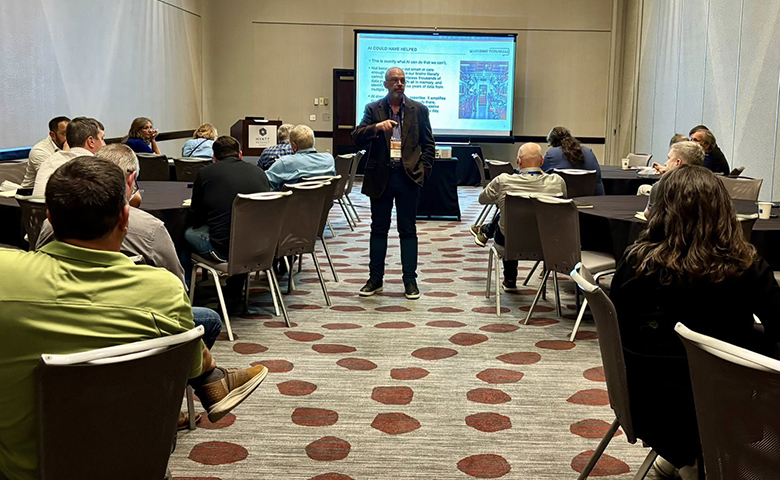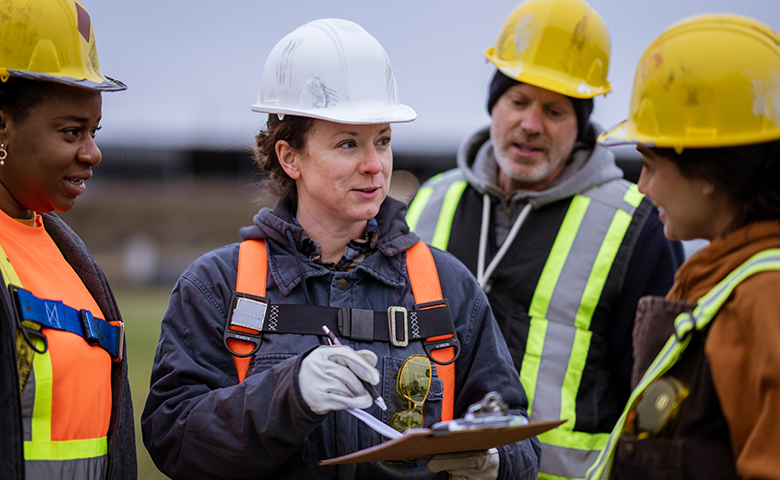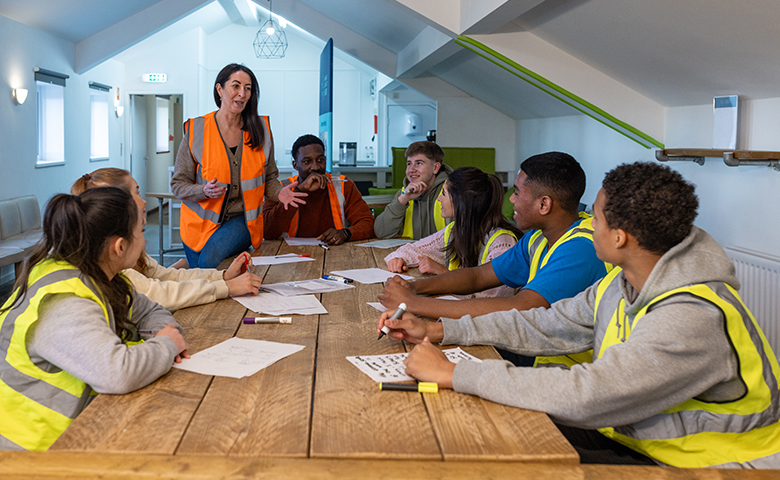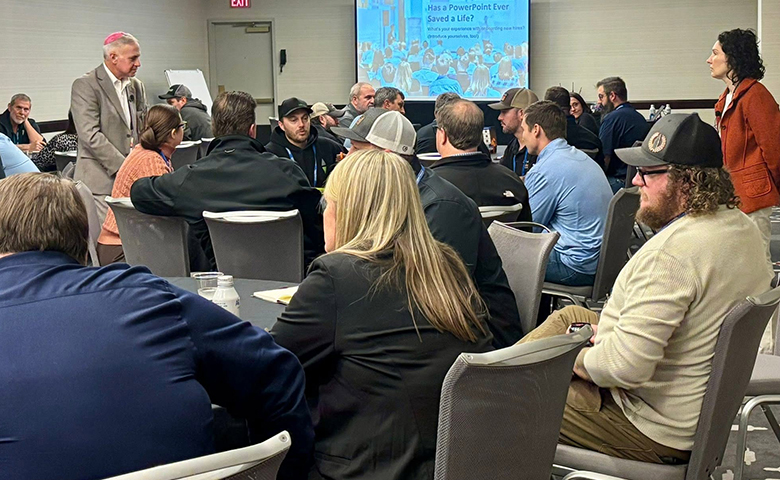
Interactive SafeStart Forum session

When was the last time a conference really changed the way you think?

Better yet, when was the last time you felt like an active participant at a conference rather than just another attendee in the audience?

The SafeStart Forum promises to do both those things. A forum, by definition, is a place where people come together to exchange ideas, engage in open discussion, and share information on topics that matter to them. The SafeStart Forum—being held October 20–21, 2026, in Franklin, TN—will bring together some of the brightest minds in safety, leadership, and human performance for an experience that goes far beyond your typical conference agenda. More than just a series of presentations, the SafeStart Forum is an opportunity to engage with new ideas, share experiences, and build meaningful connections that continue long after the event ends.

From a thought-provoking keynote session to practical takeaways you can apply as soon as you return to your workplace, this year’s SafeStart Forum is designed to spark conversations that challenge conventional thinking about safety. Set in an environment that naturally encourages networking, the Forum offers a unique opportunity to learn from industry experts, exchange ideas with peers, and leave inspired (and with the right tools and plan) to make a lasting impact within your organization.

New this year, we are encouraging people to register and join us a day early for a pre-conference PDC workshop. For just $199—the equivalent of the early-bird discount—attendees can add a half-day session on October 19, choosing between Turning Principles Into Practice, a practical workshop on integrating SafeStart into daily conversations, and AI at the Sharp End of Error Reduction and Operational Excellence, an interactive session exploring how AI can support error reduction and operational excellence. The pre-conference workshop provides the perfect foundation for the Forum, ensuring you arrive informed, engaged, and prepared to maximize every insight, discussion, and connection throughout the two days that follow.

Here’s a little bit more on what you can expect.

Beyond presentations

The SafeStart Forum is interactive by design. We’re not looking for attendees just to fill chairs at the Forum. We’re looking for participants. This isn’t a sit-and-listen kind of conference; the Forum is intentionally designed to encourage discussion—and the exchange of ideas and experiences—among attendees and presenters. There will be 100% participation and networking, so participants leave the conference with practical takeaways, and not just notes. 

For each concurrent session time slot, one option will be to attend a fireside chat. These are not your typical conference sessions. There’s no formal presentation. Instead, they are meant to be informal, conversational discussions. These sessions are designed to feel more personal and interactive, capturing the casual atmosphere and connection of sharing stories around a campfire—just without the fire (it is a safety conference, after all). Rather than simply listening from the sidelines, everyone in the room has the opportunity to contribute, ask questions, share experiences, and become part of the conversation.

We also have a networking reception planned to ensure the conversations you have throughout the day can continue. This year, it falls on Larry Wilson’s birthday, so you could be one of the lucky few who get to celebrate with him at our birthday-themed networking event.

Presentation tracks

We know that not everyone comes to the Forum looking for the same thing—that’s why this year we’re offering multiple tracks. Whether you’re a new SafeStart trainer or looking to learn more about human factors, whether you’re leading a team, driving operational improvements, or looking for fresh ideas to tackle familiar challenges, there’s a track designed with you in mind.

Start Here: SafeStart Track – New to SafeStart or human factors? Start here. This track covers the fundamentals of critical error reduction and practical ways to improve safety awareness both at work and at home.

Leadership Track – For those responsible for influencing people, culture, and results. Explore strategies for building engagement, strengthening accountability, and leading meaningful change.

Operational Excellence Track – If you’re focused on improving performance, reducing human factors, and driving continuous improvement, this track is packed with practical ideas you can put to work right away.

Thought Leadership Track – Looking ahead? This track explores emerging ideas, fresh perspectives, and innovative approaches to safety, leadership, and organizational performance.

Sustainability Track – So you’ve implemented SafeStart, now what? Learn how to maintain momentum, strengthen engagement, and embed human factors into everyday work to achieve lasting results.

The toughest part might be deciding which sessions to attend.

Lineup of speakers

One more thing that will make it harder to decide which sessions to attend is our great lineup of speakers. 

We have SafeStart notables like Pete Batrowny, Teena Blount, Dennis Carnrike, Jack Jackson, Rhonda Piggee Johnson, Kelley Norris, Kevin Nix, Tim Page-Bottorff, Chris Ross, Danny Smith, and Don Wilson. 

There will also be several new SafeStart speakers (whose names may be recognizable to you), like Char Allen, Jenn Bennett, Lynn Booth, Matt Brown, Amy Hutchinson, Jeremy Hyde, Nikole Hyndman, Tyler Keith, Lauren Lamontagne, Eduardo Lan, Mark MacLellan, Teg Matthews, Christien Renner, and Rick Ricker.

Our client speakers are another great list in their own right. We have some returning favorites—check out the full list of speakers on the SafeStart Forum website. The newbies this year include two incredible speakers from the Boys & Girls Clubs of America, two SafeStart champions from Kokosing Inc., and what promises to be an interesting presentation from a client from Michelin North America, Inc., just to name a few.

The Forum wouldn’t be complete without Larry Wilson. This year, attendees will have multiple opportunities to connect with SafeStart’s author and founder—he’ll be speaking from the big stage, sharing stories and insights, leading a session, and sticking around for a book signing. For longtime SafeStart users, that’s a bit like getting VIP passes for the event.

Be a part of the conversation

From an inspiring keynote session to valuable networking opportunities and everything in between, you won’t want to miss this year’s SafeStart Forum. Reserve your spot today on the SafeStart Forum website and take advantage of the early-bird savings.

On-demand webinar

Using a Human Factors Framework for Safety and Operational Excellence

It can be hard to see the connection between safety, productivity, human factors and organizational systems. This webinar will demonstrate how a human factors framework can impact all areas of an organization, linking individual worker safety and organizational systems and provide an outline that allows leadership to manage safety-focused change.

Watch now

Tagged , , , , ,

One worker teller his co-workers a story, manufacturing setting

Storytelling is a powerful educational tool. Narratives help people remember important information, grounding facts and advice in reality. Stories often feel more impactful than fact sheets and out-of-context rules. When safety is concerned, storytelling allows for vicarious learning, allowing listeners to learn lessons from someone else’s close calls and incidents without having to suffer the direct consequences. Every safety story shared is a free lesson that can help someone recognize hazards, avoid mistakes or make better decisions in the future. But that’s not the only thing they’re good for. The act of telling and listening to stories can also strengthen trust and support open communication between workers and safety professionals. 

Every employee comes to work with their own personal ambitions, priorities, responsibilities and motivations. And those things that make everyone unique can also make it tough to understand what each individual finds important. With four different generations making up the current labor force—baby boomers, Gen Xers, millennials and Generation Z—those personal aspirations and expectations make up a wide spectrum of experiences. With that said, learning what makes someone tick can be one of the most reliable ways to appeal to their heart and mind when it comes to safety. 

Sharing safety stories from outside the workplace can provide a glimpse into the activities, responsibilities and concerns that shape workers’ daily lives; the goals they’re working towards, the hobbies that keep them busy, their family situation and its demands. Through active listening, safety professionals can discover what motivates folks to stay safe. They can also learn what long-term personal success looks like from each individual’s perspective—whether they’re supporting a family, saving for a home or for school, paying down debt, pursuing a demanding hobby, advancing in their career or planning an active retirement.

Stories about off-the-job safety can also reveal practical information that could influence workplace performance. A story about helping a child learn to ride a bicycle may provide insight into a worker’s family situation. A discussion about a long commute can highlight transportation challenges and seasonal fatigue risks for your workforce. Stories about home improvement projects, recreational activities or volunteer work can reveal the human factors that workers encounter most often, whether it’s time pressure, distraction, complacency or exhaustion.

Over time, these conversations can help safety professionals better understand both the short-term and long-term goals that influence workers’ decisions and behaviors. And those insights can help when setting goals, motivating workers, and fine-tuning safety training so that it makes the most sense to the people receiving it.

Of course, the first step is always the most difficult when it comes to developing a culture of safety. An excellent kick-off point is simply encouraging conversations about safety at home and on the road:

  • Ask workers for safety stories after weekends, holidays or time off. In addition to sharing what they do in their personal time, this tactic gets folks thinking about safety in their everyday lives.
  • Invite discussion about driving experiences, near misses on the road or lessons they learned during travel. Driving is one of the most dangerous activities most people do on a regular basis. Stories that take place in transit illustrate what a worker’s morning or evening routine is like, and they also keep them alert to road risks.
  • Encourage stories involving family members, roommates and friends. Whether it’s teaching children about safety, caring for aging parents, helping loved ones avoid injuries or navigating shared living conditions, getting folks talking about how the people in their lives navigate risk can help clarify their role in their community’s safety and reinforce important 24/7 safety messages.

By prompting these specific types of conversations at work, safety professionals can create meaningful connections while getting to know workers better and reinforcing safety principles. That’s a lot of benefits from one strategy. So the next time you’re talking about safety, use stories from outside the workplace as an opportunity to get to know your people better. The insights you gain can strengthen relationships, improve communication and make your safety efforts more relevant and effective.

On-demand webinar

An Expert Look at Employee Engagement and Safety

Without employee engagement, even compliance can be hard to achieve. This webinar, with insight from experts, was created to help busy professionals find the right approach to increase engagement in safety. The accompanying resources aim to help you apply this new knowledge and continue learning about the subject.

Watch now

Tagged , , , , , , ,

Couple watching fireworks holding sparklers

June and July are both recognized as Fireworks Safety Month, which is good timing as we prepare to celebrate the nation in July. According to the Consumer Product Safety Commission (CPSC), most fireworks injuries are reported between June 16 and July 16. The CPSC also reported that fireworks were involved in an estimated 14,700 injuries treated in U.S. hospital emergency departments during the 2024 calendar year. The kicker? All of these injuries were preventable if the right safety measures had been applied.

One of the main reasons fireworks injuries are preventable is that the risk is seasonal and predictable—it’s the same scenario for risk every year. Summer is vacation season for many employees, making July a great time for companies to focus on off-the-job safety. Doing so reinforces an important message: the company cares about employees’ well-being not just at work, but at home and in their communities as well. Safety communications tend to be more effective when they relate to activities employees are already planning, such as family gatherings, camping trips, and holiday celebrations (including those with fireworks).

An employee injured during a holiday or summer weekend may be unable to work for days or weeks afterward, affecting both the individual and the organization. Addressing hazards employees face at home not only reinforces the company’s concern for safety beyond the workplace, but it also helps employees remember that safety message outside the workplace. The topic is quick and easy to discuss. A short toolbox talk can provide reminders that many people know but may forget in the excitement of the moment.

For a deeper dive into the complacency that exacerbates the risks associated with fireworks, SafeStart has a Predicting and Preventing Accidents flex unit that can help address those risks. The first half of the flex unit explains how to predict errors in the first place. The second half explains how to set an effective reminder to reduce risk in the moment.

While workers need to know how to predict errors for themselves, as the flex unit instructs, in the case of fireworks it’s also important to consider how human factors might be affecting other people. It’s easy to think the risk of fireworks mostly affects the people setting them off, but the crowds of people who show up to watch the show aren’t 100% safe either. In fact, viewers may be more at risk than the folks lighting the fuses—one CPSC study showed that 65% of people injured by fireworks are bystanders.

When creating a safety talk on this topic, be sure to include safety tips for fireworks spectators. A general rule for observing fireworks: watch from at least 500 feet away from where fireworks are being launched and respect all safety barriers put in place for professional fireworks displays. Do not enter restricted areas before, during, or after fireworks displays. And since fireworks are best watched in the dark, before they begin, it’s important to know where first-aid kits are located. It’s also a good idea to have your mobile phone handy in case 911 needs to be called.

Sparklers are something that often goes hand-in-hand with fireworks. While they seem harmless enough, sparklers are actually the second-most common cause of fireworks-related emergency room visits. Sparklers burn at approximately 2,000°F, which is hot enough to melt some metals).

Fireworks can produce hot debris that travels significant distances. Watch for falling debris and get out of the way if it looks like it will land in your vicinity. Avoid touching it until it has completely cooled.

Don’t forget about your pets. Fireworks can cause extreme stress and panic in animals, causing them to run away or injure themselves trying to escape the noise. Their efforts to flee may also put you in danger as you try to contain them.

It’s never a bad idea to remind workers about the many concerns related to fireworks safety as the calendar turns to June and July. Besides, summer is the perfect time to focus on off-the-job safety. So use your next toolbox talk or safety meeting as an opportunity to remind employees about the need to take safety precautions the next time they’re setting off—or even just watching—fireworks. 

On-demand webinar

Improving Culture, Safety and Performance with a 24/7 Approach

80% of injuries happen off the job but most workplace safety programs only apply during work hours. In this webinar, you will learn how a 24/7 approach can increase employee engagement during safety training, improve your safety culture, and positively impact your bottom line.

Watch now

Tagged , , , , , ,

A group of people watching a FIFA World Cup match

Every four years, the FIFA World Cup consumes audiences worldwide. According to Sports Illustrated, “the FIFA World Cup is the most-watched sporting event on the planet—nothing else comes close.” This year, Canada, Mexico and the USA will co-host the tournament in 16 different cities with 48 teams from around the globe competing in 104 matches. FIFA is projecting that around six billion people will engage with the tournament in some form.

World Cup human factors

While the FIFA World Cup is exciting, it can create real human factor risks in the workplace. You can expect to see fatigue and subsequent distraction, frustration, rushing and complacency—especially when workers are adjusting their schedules to catch matches between certain teams. With games taking place from June 11 until the final game on July 19 in four different time zones (Eastern, Pacific, Central, Mountain), some workers at your facility may likely stay up late to watch matches, wake up early for kickoff times, and spend the next day distracted talking about goals, bad calls and the outcome of the game.

FIFA fatigue

Many fans won’t think twice about sacrificing a good night’s sleep here and there over the course of the tournament. It’s only 22 days, after all. But late nights and early mornings can add up quickly. Even if people think “it’s just for this one game,” it can disrupt sleep patterns, especially when that one game turns into another, then extra time, then highlights and socializing afterward. 

Additionally, some bars and restaurants are temporarily extending alcohol sales during matches throughout the tournament. According to the Sleep Foundation, alcohol may make you initially feel tired, but it actually disrupts your normal sleep patterns, leading to lighter, less restorative sleep and more frequent awakenings.

Fan focus failure (distraction)

The problem is that fatigue doesn’t just make people tired—it affects focus, reaction time and decision-making. Essentially, they’re distracted. People aren’t just operating in a FIFA fog; it’s more like autopilot behavior, with very little situational awareness. Regardless of where you work or what you do, being mentally drained makes it harder to stay fully present and aware of what’s going on around you. 

This type of event is also likely to cause workers’ eyes and minds to not be on task if they’re curious about game results that happen during their workday. People will be checking scores during breaks, replaying highlights and talking about games with their peers throughout the day. Even workers who aren’t huge soccer (football?) fans can get pulled into the excitement. That kind of mental distraction may not seem serious, but it can take attention away from the task in front of you.

Red card rage (frustration)

Fatigue lowers patience—small inconveniences at work suddenly feel more irritating than usual, and frustration can build faster. If someone is invested in a particular game that didn’t go well, it can stick with them longer than they realize and carry over to work. Frustration causing someone to see red can mean skipping steps, taking shortcuts or not paying enough attention to routine tasks. And it’s when things don’t go according to plan that an uncharacteristic blow-up could happen.

The “one more highlight” hurry (rushing)

After staying up late for a game, mornings can feel rough. This can lead to hitting snooze too many times, leaving late and then trying to make up time by rushing. One other factor that the World Cup can contribute to (whether you altered your schedule to watch the game or not) is traffic congestion. You can expect extra traffic in the host cities and peripheral impacts in non-host cities due to the massive scale of the tournament.

Cruise-control cup mode (complacency)

The more people normalize the risk of going to work on reduced sleep, the more they’ll think they’re getting used to functioning while tired. But that’s where complacency becomes dangerous. Someone may feel like they’re fine—and even think they’re not tired—even though their awareness and reaction time are clearly reduced.

The FIFA effect

The FIFA World Cup may impact more than one worker, causing widespread workforce performance fluctuations. If a large number of workers are tired at the same time, companies may notice:

  • more mistakes
  • reduced focus
  • lower productivity
  • communication breakdowns
  • increased near misses (or incidents)

The World Cup only happens every four years. Nothing ruins a great FIFA World Cup experience like a safety incident. Making sure everyone gets through it safely is more important than any final score.

If people are planning to stay up late for games or wake early for kickoff, they should prepare for it the same way they would prepare for a shift change or Daylight Saving Time. Workers should gradually adjust their sleep schedule before the matches they want to watch and make sure they’re getting enough rest to offset the sleep debt that can build throughout the tournament. Limiting caffeine, alcohol and blue-light exposure before bed can improve sleep quality and recovery. And people should also check the World Cup schedule ahead of time so they can plan their own schedule responsibly to cheer on their team without putting themselves—or others—at risk.

Safety managers should be aware of these risks, and then take steps to address the fatigue, distraction, frustration, rushing and complacency that stem from major events like the World Cup. Be sure to start conversations early and often about the potential impacts of late-night games and disrupted sleep. Work together with employees to adjust schedules, workloads and expectations (where possible) to help minimize fatigue-related risks, maintain productivity and strengthen workplace culture.

You can also build engagement by bringing some of the excitement into the workplace through FIFA-themed team activities, providing score updates or allowing workers to watch matches in the workplace. A successful FIFA World Cup tournament shouldn’t just create memorable moments for fans—it should also open the door to help you keep your people safe, energized and performing at their best.

On-demand webinar

Focus on Distraction to Improve Safety Outcomes

Distraction is the underlying cause of most incidents. Learn how human factors training can help manage the states of mind that contribute to distraction and help prevent any related incidents in this short webinar.

Watch now

Tagged , , , , , , , ,

Eduardo Lan delivering a SafeStart Forum session

The SafeStart Forum is taking place in Franklin, TN, October 20–21, 2026. With the same premise as previous years, the SafeStart Forum is a highly interactive conference providing a unique opportunity to share best practices in human error and safety management in any industry.

New this year, participants have the opportunity to register for a half-day pre-conference PDC workshop and arrive on the Forum’s opening day engaged, informed and well-positioned to make the most of the conference experience as a cohesive learning journey.

Designed to extend beyond foundational concepts, registrants have a choice between two focused topics—each delivering practical insights, applied learning and meaningful dialogue in a highly interactive, small-group environment.

By attending one of these pre-conference workshops, participants will:

  • be given direct access to facilitators and experts in a more interactive setting (which says a lot coming from an already super interactive conference like the Forum);
  • have the opportunity to engage in smaller-group discussions than a standard conference session allows;
  • receive hands-on time to practice concepts instead of just hearing about them;
  • gain knowledge and experience that ensures more value from the rest of the Forum;
  • build stronger connections and networking before the main conference begins;
  • leave with practical tools, action plans, and next steps they can apply immediately.

The first workshop is entitled Turning Principles Into Practice: Incorporating SafeStart Into Daily Conversations. It’s an interactive workshop that helps participants move beyond understanding SafeStart concepts to consistently applying them in daily work. Through practical exercises and real-world examples, attendees will learn how to integrate tools like SafeChat, Rate Your State, and other SafeStart communication strategies into Gemba walks, toolbox talks, pre-shift meetings and everyday field interactions. 

The workshop focuses on recognizing human factors in real time and using routine conversations to reduce risk and improve performance. Participants will also explore how to apply SafeStart principles during operational challenges, such as downtime and production pressures, and leave with actionable strategies to embed human-centered safety practices into everyday work. Workshop presenters are SafeStart CCO Don Wilson and SafeStart Implementation Specialist Jeremy Hyde.

The other workshop option is called AI at the Sharp End of Error Reduction and Operational Excellence. This interactive, demo-driven workshop shows safety and operations professionals how to practically apply AI to real workplace challenges. Grounded in human factors and HOP principles, participants will learn how AI tools can support better decision-making, improve communication, identify system weaknesses and enhance operational performance—while reinforcing, not replacing, human judgment. Through live demonstrations and guided exercises using tools like Claude, attendees will apply advanced prompting techniques to analyze incidents and generate practical solutions using their own real-world examples. Participants will leave with hands-on experience, actionable use cases, and a clear roadmap for integrating AI into safety and operational excellence efforts. The workshop presenter is SafeStart Implementation Specialist Eduardo Lan.

Don’t just attend the Forum—maximize your experience. The pre-conference workshop takes place on Monday, October 19, from 12:30 pm to 4:30 pm. The add-on workshop allows you to arrive at the Forum informed, engaged and ready to make the most of every session in the two days that follow. And if you register early for the SafeStart Forum, you can take advantage of our early-bird pricing. Opening June 1, these early-bird registration savings nearly cover the cost of the add-on workshop—making it essentially free. Spaces for the pre-conference workshops are limited, so don’t wait too long to register because they will fill up quickly.

On-demand webinar

Reducing Serious Injuries and Fatalities: Three Influence Approaches and Their Effectiveness

Over the past decade, recordable injury rates have declined while serious injuries and fatalities (SIFs) rates have plateaued or increased. We’ll look at different strategies for improving the safety performance metric and discuss the skills and knowledge required to stay safe in any setting.

Watch now

Tagged , , , , , , , , ,

Women self-blaming herself

May is Mental Health Awareness Month, and that means it’s the perfect time to take a look at a rarely discussed form of blame that is common in the workplace and has significant effects on culture, health, productivity and safety: negative self-talk.

From the HOP principle “blame fixes nothing” to the “no-blame mindset” proposed by safety thought leaders Peter Batrowny and Pandora Bryce, PhD, it’s commonly understood that pointing the finger is bad for business. And that’s easy enough to understand when we’re talking about someone else’s mistake. Many leaders recognize that assigning fault damages trust, reduces communication and makes it harder to solve problems. But when the mistake is our own, many of us instinctively turn the blame inward, criticizing ourselves instead of focusing on improvement.

In his webinar Saving Your Safety Culture with No-Blame Accountability, safety expert Danny Smith describes three directions of blame. When something bad happens we are prone to point the finger at the system, someone else or ourselves. While it may feel like taking responsibility in the wake of an incident requires us to be hard on ourselves, just like with all types of blame, self-criticism often pulls attention away from the real goal: achieving positive organizational outcomes together.

Self-blame and psychological safety

Negative self-talk is the internal habit of criticizing ourselves after mistakes. Thoughts like “I always mess this up” or “I’m not good enough” may seem harmless, but they can shape how people perform under pressure, increasing stress and affecting both mental and physical health as a result. And the effects of negative self-talk can even reach into the realm of physical safety.

From a human factors perspective, excessive self-criticism can contribute to chronic frustration, reduced focus and dampened situational awareness. In the long term it reduces confidence and psychological safety; workers preoccupied with fear of failure may hesitate to speak up, report issues or ask questions. That’s why it’s important to encourage self-forgiveness in the workplace. When folks stop beating themselves up, they can think more clearly, communicate openly and make safer decisions.

Learning requires mistakes

When people get in the practice of forgiving themselves after mistakes, they open opportunities for improvement. According to Benjamin Laker, professor of leadership at the University of Reading’s Henley Business School, “critical incidents make for outstanding learning opportunities, and the most successful organizations recognize the importance of learning from mistakes.”

Organizations that treat mistakes only as failures miss valuable opportunities to identify gaps, improve systems and strengthen performance. And the same can be said on an individual level. A person who only self-criticizes after an incident may be missing the chance to improve future outcomes.

On the flipside, the kind of perfectionism that leads to self-blame can hurt both productivity and engagement. When people feel they must perform flawlessly, they often avoid taking initiative or trying new approaches. And perfectionism can lead to burnout and procrastination as individuals become more focused on avoiding mistakes than making progress. People improve faster when they prioritize learning and adaptability instead of unrealistic expectations of always optimal performance.

Confidence is contagious

Avoiding self-criticism can have a powerful social effect in the workplace too. Research from Birkbeck, University of London suggests that one person’s confidence or lack thereof can rub off on the people they interact with. Given that employees who trust their abilities are more likely to communicate clearly, collaborate effectively and remain calm under pressure, the right amount of confidence can sustain a positive culture of idea sharing and problem solving. When safety is concerned, this contagious confidence is a major benefit—assured workers are often more willing to report concerns, ask for clarification and support teammates before issues escalate.

Of course, confidence should not become overconfidence, which is a dangerous form of complacency. Healthy confidence stays grounded in humility, awareness and feedback. By focusing on continuous improvement—learning, adapting and seeking help when needed—it is possible to maintain a balance that keeps ourselves and employees improving without tipping into unsafe bravado or dangerous defeatism.

The next time an incident occurs, encourage self-forgiveness instead of blame. Accountability does not require self-destruction. Remember that errors are valuable learning opportunities as long as they are met with honesty, reflection and patience. By replacing negative self-talk with constructive accountability, individuals build confidence, strengthen psychological safety and help create workplace cultures where people can learn and perform at their best.

Free Guide

Fighting Familiarity: Overcoming Complacency in the Workplace

Mitigate complacency—don't let complacency influence your company's safety outcomes or operate at an increased level of risk. Become more familiar with individual and organizational complacency, contributing factors and get a high-level overview of what organizations can do about it.

Get the free guide now

Tagged , , , , ,

Couple driving in the spring

Winter driving is a perilous proposition in many regions. Snow in the air and ice on the roads can make for treacherous conditions for motorists. And the fact that it gets dark so early in the winter only compounds the danger of driving in the colder months. So it’s no surprise that most drivers breathe a sigh of relief by the time spring rolls around.

But make no mistake, warmer temperatures bring their own set of driving-related hazards. Springtime may not be as obviously dangerous as winter, but motorists should still pay attention to several driving safety issues once the flowers start blooming. And because these dangers tend to be less noticeable than cold-weather hazards, it’s incumbent on safety professionals to highlight the following issues for the workforce.

Where the rubber meets the road

The use of winter tires can make it a lot safer to drive on cold, slippery streets. But once the spring thaw arrives, winter tires can actually be more dangerous to drive on than all-season treads. Using winter tires out of season can also reduce their lifespan and lower fuel efficiency, costing drivers money in both the near and long term. Once the temperature reaches a consistent 44°F (7°C) or higher, winter tires should be swapped out for their more season-appropriate counterparts.

And drivers who don’t use winter tires may still have some safety-related tire maintenance to do. Notable shifts in temperature can affect tire pressure, which also naturally diminishes over time. This makes spring a great opportunity for folks to check the pressure on their all-season tires. While they’re at it, it’s also worth checking the overall condition of tires to ensure they are still safe to drive on. A bit of preventative maintenance and using season-appropriate treads can go a long way toward avoiding tire-related issues later in the spring or summer.

Walking (and biking) on sunshine

While snowy conditions present all sorts of challenges for drivers, one safety-related upside in the winter is that there are fewer pedestrians and cyclists to contend with. That all changes when spring arrives. People start tuning up their bicycles, and crosswalks begin filling with people who are out soaking up the nicer weather.

Over 7,000 pedestrians were killed by traffic crashes in 2024, and another 71,000 were injured, according to the National Highway Traffic Safety Administration. Pedestrians are particularly at risk in the springtime as drivers may have slipped in their habit of watching out for other road users.

Cyclists and people on foot are at the greatest physical risk, but motorists who injure or kill someone face their own mental toll as well. So while some workplaces regularly discuss pedestrian safety as it relates to forklifts and other work vehicles, the spring is also an ideal time to have a broader conversation about the need to pay attention to pedestrians and cyclists outside of work.

Complacency alert!

Human factors are a major contributor to all sorts of incidents, so it’s no surprise that they’re a factor in spring driving hazards. And while states like rushing and frustration can affect drivers throughout the year, complacency can be especially prevalent as winter departs and spring arrives.

By mid-spring, many of winter’s hazards have literally melted away. Extra hours of daylight boost everyone’s mood. And with more going on around you, there’s plenty to look at and, seemingly, less need to focus on road conditions as you’re unlikely to encounter a nasty patch of black ice. This makes spring driving a breeding ground for complacency and distraction.

These factors are problematic in their own right, and they also compound other safety issues. Complacency can cause car owners to forgo tire maintenance, and distraction can lead drivers to miss a pedestrian crossing the road in front of them. This makes human factors a particularly notable problem for motorists in the spring.

It’s also a good example of how an effective human factors management program can improve safety outcomes in all sorts of situations. Because while few workplaces will implement human factors training solely for its seasonal safety merits, there are very real benefits to teaching employees how to mitigate issues like complacency and distraction, which can fluctuate as much as the weather.

The safety manager effect

These may not seem like major hazards to a lot of people. Yet each of these issues can elevate the risk of an incident. And given the amount of hazardous energy involved in operating a vehicle, any incident has the potential to turn deadly.

Safety managers have a number of tools at their disposal to point out these issues to workers in order to help keep people safe on the road. Safety meetings are an obvious opportunity, and a couple of spring-themed toolbox talks can go a long way. One-on-one conversations are also an option, especially if a safety manager believes that certain employees may need more frequent reminders. Meanwhile, displaying safety posters can help spotlight seasonal safety issues, especially if they’re used in conjunction with reminders provided in meetings and informal conversations. Just don’t forget to rotate the posters out before they lose efficacy, otherwise they could inadvertently contribute to a sense of complacency.

Safety managers are in an ideal position to remind workers about the often overlooked hazards of driving in the spring. So no matter which tactic they use, safety professionals should take the changing season as an opportunity to emphasize the importance of checking and/or changing tires, looking out for pedestrians and cyclists, and paying attention to human factors like complacency and distraction.

Free Guide

Fighting Familiarity: Overcoming Complacency in the Workplace

Mitigate complacency—don't let complacency influence your company's safety outcomes or operate at an increased level of risk. Become more familiar with individual and organizational complacency, contributing factors and get a high-level overview of what organizations can do about it.

Get the free guide now

Tagged , , , , ,

Jamie Clarke actively presenting a keynote

Are you looking for adventure? Great stories? Leadership advice?

This October, the SafeStart Forum opening keynote speaker will bring all of that and more to Tennessee. Jamie Clarke has spent his life operating in environments where there is little margin for error and he knows too well that the consequences of human factors are immediate, visible, and unforgiving.

To give you a bit of background, Jamie is a Canadian mountaineer, world-class adventurer, entrepreneur, and performance coach who has been a sought-after speaker for over 25 years. Jamie reached Mount Everest’s death zone summit twice (in 1997 and 2010). He’s trekked 1,000 miles across the most inhospitable desert on the planet (crossing the barren Empty Quarter by camel). And he is one of the few alpinists to reach the Seven Summits—the highest peak on each of the seven traditional continents (Kilimanjaro–Africa, Elbrus–Europe, Aconcagua–South America, Carstensz Pyramid–Oceania/Australia, Denali–North America, Vinson Massif–Antarctica and Everest–Asia). 

Jamie also launched and ran a retail operation for 14 years and he was the founder and CEO of an e-commerce start-up. You better believe he’s going to use his adventuring and business experience to keep you on the edge during his keynote. And let us tell you, storytellers don’t get any closer to the edge of human experience than he does.

His keynote, entitled “The Map is Not the Terrain: Charting a New Course for Leadership”, will take you into the mindset of what can be done in the face of uncertainty. He’ll talk about what it’s like when you have the map, but it just doesn’t make sense in relation to the terrain in front of you. Jamie has been quoted as saying, “Uncertainty leads to indecision. Indecision leads to fear. Fear leads to chaos. Chaos ends in failure. Always.”  Jamie will chart the way to the importance of building team cultures that don’t shrink from uncertainty. Instead, they succeed when others fail.

Jamie builds all of his worldly experience into his keynote. With an infectious sense of humor and palpable, authentic passion, Jamie challenges his audiences to think differently about success, failure, hard work and fear.

And Jamie’s keynote is just the beginning of the remarkable programming planned for the 2026 SafeStart Forum, which is a highly curated, interactive experience designed to have a lasting, positive impact on your safety perspective. To learn more about the keynote and speakers at the SafeStart Forum in Franklin, TN, this October, visit safestartforum.com. Early-bird registration goes live on June 1!


On-demand webinar

Using a Human Factors Framework for Safety and Operational Excellence

It can be hard to see the connection between safety, productivity, human factors and organizational systems. This webinar will demonstrate how a human factors framework can impact all areas of an organization, linking individual worker safety and organizational systems and provide an outline that allows leadership to manage safety-focused change.

Watch now

Tagged , , , , , , ,

Employees engaged in the workplace

Some safety implementations fall flat from the get-go. Plenty of safety managers know all too well the feeling of an initiative that seems like it was doomed from the start. Many more implementations tend to feel mediocre, and while they achieve some measure of success, it can feel like they never really shift into a higher gear.

And then there are those rare safety implementations that feel like they have a certain sparkle to them. The training lands well, workers are engaged and afterwards you can notice a positive difference in workplace behavior. And once you’ve experienced this once, it raises the immediate question: how do you replicate it for future safety training?

Some items are obvious contributors to a stand-out implementation. Yes, you likely need a well-designed program that adheres to proper adult learning principles. And yes, you likely also need an initiative to be implemented properly, ideally by an experienced safety professional. But those and a host of other safety success factors still depend on the presence of a single keystone issue: safety buy-in.

Safety implementations are more effective when workers believe in them. They’re less successful when workers are resistant to them. In many ways, it’s as simple as that. And when you look beyond discrete initiatives, the same is true of day-to-day safety in the workplace. Researcher and New York Times-bestselling author Rod Wagner discovered a strong correlation between worker engagement and safety outcomes. Additional research backs up Wagner’s findings, with recent data from Gallup demonstrating that more engaged employees have 63% fewer safety incidents.

High levels of employee buy-in for safety can make new EHS initiatives more effective and improve day-to-day safety outcomes. So it makes sense that safety professionals want to foster a greater belief in safety. But there’s just one catch—safety buy-in almost never happens in a vacuum. In the vast majority of workplaces, there is a strong, positive correlation between safety engagement and a broader sense of employee engagement. In short, it’s hard to have one without the other.

This means that an otherwise sterling safety initiative can fail to gain traction because of low worker morale. It also means that an otherwise lacklustre safety program could outperform expectations thanks to strong engagement among employees. 

There is both good news and bad news for safety professionals. The bad news is that when employee engagement suffers as a result of any number of factors—such as layoffs or increased production quotas—safety engagement will likely suffer as a result, even if the safety department had nothing to do with it.

Conversely, a rising tide lifts all boats. When engagement rises, there’s a good chance that safety will see some beneficial effects as a result. It’s worth noting that other areas of your company will also see gains, with the Gallup research showing that better engagement correlates not only with positive safety outcomes, but also with less wasted material, better productivity and lower turnover. 

And because the safety engagement/general employee engagement relationship is a two-way street, there are things that EHS folks can do to help move the dial in a positive direction. These include:

These are among the key success factors for building a more positive safety climate that can, over time, have lasting positive effects on employee engagement levels throughout the workplace.

Getting safety buy-in doesn’t happen in isolation. It’s not something you can pick off a menu. Instead, it’s part of a larger suite of employee attitudes to work. Many successful safety managers recognize that fact and begin coordinating with leaders from other departments to begin fostering a greater sense of engagement across the board. 

This can be as simple as making safety a greater part of the everyday language on the worksite. As one SafeStart client puts it, there are “words we try to get our plant people—especially our plant managers and our leaders—to talk about safety.” And while that’s only part of the puzzle, consistent messaging can be combined with strong demonstrations of care and a focus on managing human factors. When that happens, the road to stronger engagement may be shorter than you think.

It’s no mystery why some safety initiatives stand head and shoulder above the rest: they’re well designed, well executed, and perhaps most importantly, workers believe in them. While you can’t get workers to buy in overnight, there are steps you can take right away to start winning hearts and minds. And if you recognize that safety engagement is closely tied to broader employee engagement, you can begin making the case to leaders throughout your organization that everyone wins when the organization takes a positive and unified approach to employee engagement.

On-demand webinar

An Expert Look at Employee Engagement and Safety

Without employee engagement, even compliance can be hard to achieve. This webinar, with insight from experts, was created to help busy professionals find the right approach to increase engagement in safety. The accompanying resources aim to help you apply this new knowledge and continue learning about the subject.

Watch now

Tagged , , , , ,

Leader asking questions on a job site

Engagement is a crucial element for success in safety, quality and performance. Studies show that engaged workers are more likely to stay at an organization in the long term and are less prone to chronic human factors like burnout. From a safety perspective, engagement helps workers keep their eyes and mind on task and helps them avoid hidden human factors like complacency. But knowing the benefits of engagement and making it happen in your workplace are two separate things.

Thankfully, safety engagement is something that frontline leaders can build every day through a simple practice of asking open questions that cannot be answered with a one-word response. By asking questions that start with the words “what,” “how,” and “why,” you invite folks to share their experiences, and that can be powerful in two key ways. First, it gives you insight into the culture of your organization, otherwise known as “how things are done around here.” That can be an invaluable tool for a safety leader looking to protect their people. Second, it demands self-reflection from the person answering the question, and that is a key ingredient in the recipe for engagement.

So if you want to boost engagement, asking the right questions is a great place to start. And here’s the best part: you can keep asking the same things to achieve this effect, as long as you choose your words carefully. Here are three open questions you can add to your conversational toolbox that can help build engagement with every worker interaction.

Question 1: Why do you do it that way?

With repetitive tasks, it can often be too easy to go through the motions without understanding why certain actions are done in specific ways. That includes by-the-book instructions as well as shortcuts. Being able to explain why something is done the way it’s done is crucial for ensuring engagement because it helps connect the actions performed in the present moment to the outcomes they produce in the future. In other words: knowing why you do something helps you better understand what it is you’re doing.

Putting on additional PPE before operating a specialized piece of machinery might seem like an unnecessary precaution, especially during repetitive and familiar work, but being able to articulate the safety reasons behind it is a surefire way to make the extra step stick. Meanwhile, some shortcuts are taken because of an outside pressure, and asking why someone skips a step in a process can be a great way to identify hidden challenges that increase risk for workers.

Of course, it’s very important to avoid sounding accusatory when asking someone why they are doing something. People don’t like to feel judged or condescended to, and if they sense they’re being disrespected or distrusted, then they might check out, which is the opposite of our engagement goal. That’s why this question is best asked when a worker is already walking you through a process.  When it comes to engagement, remember that the point of asking questions is to hear from workers, not to discipline them, so always be clear that you’re interested in understanding their process.

Question 2: How could this be better or worse?

Asking workers how a process can be better is a great way to learn their priorities and stressors. It is also a great way to show them you care about their opinion, especially if you can use their input to implement a change that makes their work easier or safer. Small improvements to a worker’s day-to-day tasks can go a long way in boosting morale, and might even directly improve safety if you can make their work less frustrating or more ergonomically feasible.

And when it comes to the flipside of this question, asking how a near miss or a minor accident could have been worse, is a real eye-opener. This is especially true when sharing safety stories, as it helps illustrate the high stakes of safety in a personal way. Next time you tell your own safety story, ask the listener how they think the outcome could have been worse—it’s a great way to help them remember the lesson you’re trying to impart.

Question 3: What do you have planned after work?

Taking an interest in employees’ lives outside of work is an effective way to demonstrate personal commitment to them while also learning about what motivates them to perform well and be safe. After all, everyone cares about something, and that means they work for different reasons. Some folks have long-term aspirations of professional growth and leadership. Others work their job to support their family or their lifestyle, and are happy to just put in their time. Being attentive to what matters to them is a great method for learning about the types of people you’re working with, and it’s an effective way to show them that you care about them as people.

Getting to know your employees can also help you talk about safety outside the workplace. And it doesn’t have to stop there. Asking the previous two questions in the list—why they do something and how a situation could be better or worse—about a worker’s extracurricular activities can get them thinking about safety when they’re off the clock, helping to expand engagement into a 24/7 context.

Responses to these open questions change frequently, so you can continue to ask the three listed here day in and day out, getting a new answer every time. It will build relationships and communication lines, arm you with crucial safety information, and most importantly, create a habitual culture of engagement. Repetition is the best way to build a habit, after all, and when you get workers regularly answering engaging questions, they may start to naturally think about the what, how and why of their everyday actions without being asked.

Free guide

How To Make Habits Stick

Most of what we do every day is habitual, so learning how to change or form new habits can be a game-changer in safety. Use this guide to help your employees learn how to do it effectively.

Get the free guide now

Tagged , , , , , , ,

Safety steering committee meeting

A number of questions should be asked before committing to any new safety initiative. Cost is a common concern, as are training timelines and other nuts and bolts issues. But one consideration on the tip of virtually every safety professional’s tongue is a bit more complex than others: sustainability.

Sustainability is one of the primary goals of any safety training, but no EHS initiative is entirely self-sustaining after it’s rolled out. Wise safety managers have learned to ask in advance how much time, energy and resources they’ll have to commit in order to maintain the initial training outcomes.

When safety folks prioritize sustainability from the outset, they gravitate to vendors who know how to integrate their initiative into the broader safety culture. The end result tends to be more bang for their buck, with newly learned safety skills lasting for years on relatively little effort from the safety department. And the importance of sustainability isn’t limited to safety training initiatives. It’s just as important for safety steering committees.

Safety steering committees can play a critical role in the ongoing success of all sorts of safety issues. When the committee is thriving, you often see more—and better executed—safety happenings around the workplace. On the flip side, if the group runs out of steam, so do all sorts of safety initiatives. Even worse is when there’s no safety steering committee at all, leaving everything up to the safety department, whose plates are already full and who may have a challenging time replicating the representational benefits of a committee drawn from different employee groups.

Fortunately, there are a few secrets to keeping your workplace safety committee eagerly heading in the right direction.

Secret #1: Overlapping roles and responsibilities

An effective safety steering committee will include several roles, such as a chairperson, communications coordinator and members at large from a variety of departments. These roles ensure that there’s no ambiguity as to who is responsible for what, and make sure that everyone is in the best position to contribute their specific set of skills to the committee.

Having well-defined roles will also offer an opportunity to deal with one of the biggest problems that plague safety committees. Burnout can have a serious effect on these groups, especially when the same members have served on the committee for years. Thankfully, there’s no rule that says a role has to be filled by only one person. It’s completely reasonable to assign two people to a single role, or to have a member-at-large temporarily step in to assist when there’s a substantial workload.

So if your communication coordinator is feeling run down by their responsibilities, consider assigning a second person to the role. They can share the duties, or one person can serve as a deputy coordinator—many permutations are possible based on each person’s specific skillset and schedule. Doing so can lighten the load for everyone and ensure that tasks are more evenly distributed.

Secret #2:  Succession and knowledge transition

Doubling up the number of people serving in steering committee roles does more than tamp down safety burnout—it can also be a big help in succession. No one can serve on the steering committee forever. And nor should they! Adding new members to the committee, and allowing long-serving members to step back, is a great way to inject new energy and fresh perspectives into a safety committee. At the same time, it’s a shame to lose hard-won experience when members leave the committee.

Fortunately, having two people serve in one role makes succession-related transitions much easier, as it provides a long runway for tenured members to share information with newer colleagues. This is especially true for bigger roles such as the committee chair, where a year or two of overlap can be crucial.

If you time it properly, you can also plan committee successions so that there is a slow but steady stream of turnover, with one or two new members joining the committee every year, and one or two longstanding members leaving the committee as their understudies take over their roles. Otherwise, you risk the alternative: getting hit with a tsunami of departures as everyone on the steering committee becomes burnt out at the same time.

Secret #3: Celebrate safety teams

Steering committees do vital work—and employers should make sure the committee members are recognized for their invaluable contributions. A recent study by Gallup found that recognizing employees is a low-cost way to motivate folks within an organization and offer a sense of accomplishment. Not only does it encourage the employee to keep up the good work, but it can also inspire others to join the steering committee in the future.

Employee recognition can come from all sorts of places, but it’s often most meaningful if it comes from company leadership (such as the CEO or plant manager) or from a senior safety person. There’s one other benefit to recognizing the steering committee: taking the time to celebrate the safety committee’s achievements at the next company-wide meeting will communicate to everyone that safety is a core value at your company. And as research has shown, this is one of the first steps in building a stronger, more resilient safety culture.

Steering in the right direction

Safety professionals have a number of strategies that they can deploy to make things easier on hard-working safety steering committee members. How roles are structured and the timing of when people join and depart the committee can dramatically affect burnout. And providing public recognition can give a shot in the arm to team members while also fostering a company-wide belief that serving on the safety committee is a worthwhile endeavor.

Depending on the existing state of your safety steering committee, it can take a bit of work to implement some or all of these ideas. But the long-term benefits of gaining a sustainable safety committee is well worth the effort, as a high-functioning team can have notable effects on organizational EHS outcomes.

On-demand webinar

Using a Human Factors Framework for Safety and Operational Excellence

It can be hard to see the connection between safety, productivity, human factors and organizational systems. This webinar will demonstrate how a human factors framework can impact all areas of an organization, linking individual worker safety and organizational systems and provide an outline that allows leadership to manage safety-focused change.

Watch now

Tagged , , , ,

Worker cleaning industrial dirt

April is here, bringing brighter days, warmer weather and a burst of springtime energy. The time for hibernation is over, and for many workplaces, it’s the perfect opportunity to reset, reorganize and refocus on safety through spring cleaning. While often seen as a routine or cosmetic task, workplace cleaning plays a critical role in hazard prevention, long-term health and overall operational performance. 

Here are some of the top reasons to take spring cleaning seriously from a safety perspective.

Better hazard reduction

A cluttered workspace is a breeding ground for hazards. In industrial settings, construction sites, and warehouses and manufacturing facilities, even small amounts of disorganization can lead to serious incidents. Loose materials like scrap metal or wood, packaging, and tools and cords increase the risk of slips, trips and falls—one of the most common causes of workplace injuries.

Accumulated waste—such as cardboard, paper or oily rags can—can also significantly increase fire risk. These materials are often overlooked in day-to-day operations but may quickly become dangerous if left unchecked. Spring cleaning provides an opportunity to remove these hazards, inspect storage practices and reinforce proper disposal procedures. By reducing the amount of litter, rubbish and junk in a working space, you’re actively eliminating risks before they lead to injuries.

Better environmental health

Not all hazards are immediately visible. Poor housekeeping can allow harmful substances to build up over time, creating long-term health risks for workers. Dust from materials like silica, wood or drywall can accumulate in the air and on surfaces, potentially leading to respiratory issues or chronic and incurable illness if exposure is prolonged.

The same goes for chemical and oil residue, which may linger unnoticed in corners, on equipment or in ventilation systems. In some cases, biological hazards like mold can be present in workspaces too. Very few of these pose an immediate danger—though allergens can cause workers to be distracted, increasing their risk of error—but long-term exposure can lead to serious health problems.

Spring cleaning is a chance to go beyond surface-level tidying and address these hidden dangers. Deep cleaning, proper ventilation checks and safe handling of hazardous materials can significantly improve air quality and reduce exposure risks. A cleaner environment supports long-term worker wellbeing.

Better visibility

Disorganization doesn’t just create new hazards—it also camouflages existing threats.  Visual noise makes it harder for workers to identify risks quickly. A loose blade in a messy drawer or a damaged tool buried under other equipment may go unnoticed until it’s too late.

And the door swings both ways: clutter makes it difficult to see important elements of a safety system. Safety signage, emergency exits, fire extinguishers and control panels can become partially or fully obstructed in a messy environment, delaying response times in critical situations. Even something as simple as a disorganized first-aid kit or an obstructed AED can slow down response during an emergency, when every second counts.

Spring cleaning helps clear important sightlines and restores logic to complex spaces. When tools, equipment and safety resources are stored properly and consistently, workers can find what they need quickly and identify hazards more easily. In high-risk environments, that clarity can make a significant difference between going home at the end of the day or clocking out early for an ambulance ride.

Better morale

Cleanliness influences how people feel and behave at work. Human factors play a major role in workplace safety, and morale is a key part of that equation.

A clean, organized environment fosters a sense of pride and professionalism. Workers are more likely to take ownership of their tasks and surroundings when they feel their workplace is well-maintained. On the other hand, a messy or neglected space can lead to frustration, disengagement or even complacency—conditions that increase the likelihood of errors.

People feel less stressed in environments that are orderly and presentable. That confidence can translate into better communication, stronger teamwork and more proactive safety behaviors. Spring cleaning can act as a reset, reinforcing shared standards and encouraging everyone to contribute to a safer workplace culture.

Better security

In today’s workplaces, safety extends beyond physical hazards to include digital risks. Many work environments now rely on digital systems for operations, communication and record-keeping. With this shift comes the need for better data security practices.

A cluttered workspace can increase the risk of sensitive information being exposed. Passwords written on paper, unlocked devices left unattended or misplaced documents can all lead to security breaches. And while these risks may seem less immediate than physical hazards, their consequences can be just as serious. A cyber attack in a manufacturing facility can cause machines to malfunction in dangerous ways, and even stolen data has a safety component—a significant portion of identity theft victims experience suicidal thoughts.

Spring cleaning offers a chance to bolster against digital threats by organizing workstations, securing documents and reinforcing best practices for device use. Ensuring that digital tools are properly managed and protected is an increasingly important part of overall workplace safety.

By reducing hazards, addressing long-term health risks, improving visibility, boosting morale and strengthening security, a clean workplace supports safer behaviors and better outcomes across the board. This April, take the opportunity to go beyond routine cleaning. Use it as a chance to evaluate your environment, reset expectations and build habits that last throughout the year. When cleanliness becomes part of everyday operations—not just a once-annual effort—you create a workplace where hazards are easier to spot, risks are better managed and people can perform at their best.

Free guide

How To Make Habits Stick

Most of what we do every day is habitual, so learning how to change or form new habits can be a game-changer in safety. Use this guide to help your employees learn how to do it effectively.

Get the free guide now

Tagged , , , , ,