Complacent worker in cable production plant

Complacency is often listed as a contributing factor when incidents occur. But what are the contributing factors of complacency?

It’s essential to know how to identify complacency because unlike states of mind like rushing, frustration, or fatigue, complacency is almost impossible to notice in the moment. It’s something you recognize as the cause after an incident occurs. That’s why it’s often referred to as the silent killer.

Since complacency often happens in a state of reduced awareness, it’s important to identify the outside factors and conditions that contributed to it. Complacency can have a negative impact on the performance and productivity of workers as well as put them at a higher risk of injury—that’s why it’s important to recognize the contributing factors of complacency.

Familiarity/Repetition 

Becoming overly familiar with a task or setting can cause workers to become comfortable with not only the task but also the associated risks. There may even be instances where workers forgo the risk assessment on a job because of their knowledge of the job or another contributing state of mind, like rushing or fatigue, that influences them to think that nothing bad will happen.

Repetitive tasks are ones that workers quickly become familiar with. The monotonous tasks do not feel dangerous, so workers often become less attentive to safety when performing these tasks.

Unchallenging work

Tasks that are viewed as easy or mindless will translate into potential hazards being overlooked. This sense of superiority in completing these tasks can lead to a false sense of security and overconfidence in the job. With any task that doesn’t require much thought, the mind will wander. Mind wandering is often synonymous with complacency.

Lack of engagement

Employee engagement can be described as the level of enthusiasm a worker feels toward their job. This has a direct correlation to safety. If employees are not enthralled by their work, they also won’t be focused on the associated risks, becoming complacent about them. 

According to a report by Gallup, engaged employees have 63% fewer safety incidents. That benefit causes a positive feedback loop, “when it comes to safety … people can count the number of times they’ve helped someone else stay safe, removed a hazard or reported a near-miss. If they can see their impact, they’ll be more likely to engage.”

Culture as an example

If other workers develop a lax attitude towards safety and frequently take shortcuts, it won’t take long for that to become the company culture, or, to put it another way, “how work gets done around here.” Clearly, these workers aren’t thinking about potential risks or hazards and are unknowingly spreading complacency throughout the jobsite. For example, workers routinely fail to install guardrails and toeboards around open sides of scaffolding platforms. When new employees are working with experienced workers on a job site with scaffolding, they will be subjected to the culture of skipping guardrails and toeboards. It can be challenging for new workers to go against the grain of workplace culture, even if they’ve been trained properly.

Continued success

There’s a banal phrase in the safety world that accompanies complacency: “We’ve been doing it this way for years and nothing bad has ever happened.” A string of successful projects or effective tasks instills confidence. This mentality is reinforced by the absence of an incident—because nothing has happened, it’s easy to believe it never will. Past successes cause workers to underestimate the potential risks, believing that previous positive outcomes guarantee future safety.

Once a system is in place, it can be tough to remember to check in on it. After all, a plan doesn’t change on its own. But as the people who enact that plan experience new challenges—from deadlines to new team members to organizational change—it’s important to review the systems in place and make sure they aren’t increasing the risk of human factors. By making a habit of regularly checking, you can ensure the roadmap you planned initially doesn’t lead workers into danger.

This blog post is an excerpt adapted from Fighting Familiarity: Overcoming Complacency in the Workplace. It defines complacency, discusses individual and organizational complacency, offers insights into its contributing factors, and provides a straightforward overview of what organizations can do about it. Download it to proactively reduce complacency in your workplace.


Free Guide

Fighting Familiarity: Overcoming Complacency in the Workplace

Mitigate complacency—don't let complacency influence your company's safety outcomes or operate at an increased level of risk. Become more familiar with individual and organizational complacency, contributing factors and get a high-level overview of what organizations can do about it.

Get the free guide now

Tagged , , , , ,

Top 10

It can be hard to know where to go for your safety news. Industry-specific magazines, safety organizations and even government bodies do a good job of publishing news articles, industry updates and best practices through their websites’ news sections and newsletters.

But if you’re reading this, that means (in addition to being ridiculously smart and having impeccable taste) you know we also offer a wide variety of topics for our readers that you won’t likely find on other sites. If you’re new to the blog, this top ten list is a good overview of the kind of content you’ll find here.

Here are the top ten blog posts that all our readers engaged with in 2025.

#1 — 12 Toolbox Talks of Holiday Safety

This first post is fitting for the season—it’s set up like the Twelve Days of Christmas song, but adapted as messages of holiday safety instead of gifts (although, we’d like to argue that these holiday safety messages are gifts, and much better ones than in the original song. Seriously, does anyone want or need 23 birds?) This post outlines 12 holiday safety toolbox topics and you won’t find a better list of ideas anywhere else. 

#2 — 4 Often Overlooked Types of New Workers

The next post shifts the focus to new worker safety. Studies show that new hires are at a greater risk of being injured in their first year on the job. But blanket safety measures won’t keep them safe because not all new workers face the same risks. In order to keep this high-risk group of employees safe, it’s important to pay attention to potential sources of injury during the new hire’s onboarding. This post outlines four classes of new workers—and some of the risks that can be specifically challenging for them. 

#3 — 4 Resources to Get Better Safety Performances From Supervisors

It’s much easier to get favorable safety results when you’re working with the right resources. Supervisors are in a position to monitor individual employees’ safety performance and to intervene when necessary. This post outlines four of the best safety resources that safety folks can use as they consider how to get better safety performances from supervisors and workplace leaders.

#4 — 11 Construction Topics to Construct Your Own Toolbox Talks

Finding ready-to-deliver toolbox talks on the internet can be incredibly difficult. But more often than not, when many folks sit down to think of good topics to develop their own toolbox talks, their minds go blank. This post offers eleven ideas specifically geared to the construction industry. 

#5 — Connecting the Dots Between Construction Safety and Labor Trends

In addition to ready-to-use resources, this blog aims to keep readers informed on larger trends as they intersect with safety and human factors. This post is a gateway to an article our Marketing Director, Ray Prest, penned for Occupational Health & Safety magazine titled “Construction Safety in the Atypical Wake of Worker Turnover”. The post (and article) provides advice on what can be done with the continually shrinking labor pool found in the construction industry.

#6 — How to Overcome Resistance to Organizational Change

Change is hard for everyone in any situation. When it comes to organizational change, it’s not surprising that it’s often met with resistance. This post reviews the change curve, how to overcome resistance and six change approaches. There’s a lot of great information packed into this great blog, and it’s no wonder it’s number six on our list.

#7 — A Quick and Dirty Guide to Choosing the Right Ladder

It’s surprising the number of people who choose the wrong ladder for the job. But the fact is, not all ladders are universal for every task and selecting the wrong ladder is the main reason for a large number of ladder incidents. This post breaks down the material, weight and size of ladders to ensure their proper use—a practical guide worth bookmarking and sharing with your colleagues.

#8 — 3 Toolbox Talk Variations for Better Engagement

Even if you have new toolbox talk topics, when they’re consistently presented in the same way, they can become stale. This post introduces three different ways to frame your safety talk in order to get the most engagement. It’s worth a look if you’re aiming for your toolbox talk to be effective—and if you’re here, you’re already ten steps ahead of the people phoning it in by just reading something from the internet. If you put just a little bit more effort, as this post suggests, you’ll get back engagement and retention tenfold. 

#9 — Stop, Collaborate and Listen: Steps to Improve Safety Engagement

You may recognize the words Stop, Collaborate and Listen as the opening to Vanilla Ice’s hit, “Ice Ice Baby”. But SafeStart’s Tim Page-Bottorff turned those three words into a three-step approach to teamwork by looking at the example of a non-emergency chemical spill. The approach can lend itself to any workplace scenario and other soft skills and culture-building leadership techniques can only further enhance this method. 

#10 — 4 Ways Frontline Supervisors Influence Workplace Safety

It’s no secret that frontline supervisors can have a positive effect on workplace safety. But they can also just as easily have a negative effect. This final post on our list outlines four areas that frontline supervisors have within their control (and how they can use these powers for good). Learn how a frontline supervisor’s actions can impact safety.

There were a couple of recurring themes this year in terms of what people were looking for from our blog. From new worker safety to toolbox talk ideas to tips on employee engagement, this top ten barely scratches the surface of the type of content we publish here on a weekly basis. Hopefully you found these posts as inspiring as the first time you read them, or you had a chance to discover their value for the first time. 

Hopefully you’ll join us in reading our new blog posts in 2026 and aim for a year of total safety! 

On-demand webinar

Safety and the Supervisor: Developing Frontline Leadership Skills to Improve Safety

Supervisors are the bridge between organizational directives and on-the-ground operations. Their skills and knowledge are critical to a seamless flow of information in both directions and to their organization's safety success. This webinar offers EHS managers and company executives actionable advice on improving safety through leveraging the role of frontline leaders.

Watch now

Tagged , , , , , , , , ,

Woman overwhelmed at Christmas

December is a time to plan for Christmas and that means engaging in activities you don’t often do—like increased cooking or baking (or attempting new recipes)—and getting caught up in the rush of the season. 

There is an influx of people on the roads to do their holiday shopping, get extra groceries, and visit more often with friends and family this time of year. Because the things you do during the holidays are not your usual routine, it’s easy to be distracted and get caught up in what you’re doing—and human factors have a way of impacting people without them noticing.

According to our guide, Fighting Familiarity: Overcoming Complacency in the Workplace,

Human factors can create a cycle where a certain level of complacency allows individuals to feel comfortable enough to rush or continue working when tired or frustrated, then the rushing leads to frustration, which leads to fatigue, which can add more complacency—individuals become less vigilant, more prone to errors, and ultimately more likely to underestimate risks. 

This is especially true this time of year. But it’s not just the workplace you need to worry about—particular attention to 24/7 safety is needed. The holiday season seems to be a time when haste increases, and people are unknowingly (or knowingly and uncaringly) rushing to complete the extra things on their to-do list. Combine those human factors with traffic congestion from increased holiday shopping and winter weather conditions affecting the drives, and you’re likely to see more accidents and injuries.

No one ever thinks that they’ll be the one in an “accident,” especially not when you’re too busy thinking about joy, hope, and family togetherness. Stories are a great way to learn lessons and proactively prevent incidents—they help us learn vicariously through others.

That’s why storytelling is a key part of SafeStart because people remember the stories long after the training. We have a certain structure to the way our SafeStart stories are told to capture what is needed to grasp the key takeaways.

Check out this SafeStart story from SafeStart’s Marketing Manager Rachael Daniels. While a lot of stories have to do with driving, this one is something that happened at home. It’s called Unintentional Improvised Explosive Dessert (IED)—a bit of military humor, as an IED is an Improvised Explosive Device. She recalls the first Christmas that she and her husband hosted their entire family for the holiday soon after he came back from being deployed overseas, and she shares the habit that she and her husband share to this day.

You can read it like a toolbox talk, use it as a safety share at your next meeting or print it out to see if you can get a discussion going in the breakroom. The human factors depicted in the story are ones that anyone can relate to. As is the main subject of the story—who can’t relate to your first time hosting a big family meal?

From all of us at SafeStart, have a safe and happy holiday!

Free Guide

Fighting Familiarity: Overcoming Complacency in the Workplace

Mitigate complacency—don't let complacency influence your company's safety outcomes or operate at an increased level of risk. Become more familiar with individual and organizational complacency, contributing factors and get a high-level overview of what organizations can do about it.

Get the free guide now

Tagged , , , , , , ,

Various members on a steering committee

Safety steering committees have a big job. They can play a crucial role in safety implementations, and they also have a huge influence on safety sustainability. An effective steering committee can help make safety feel like a constant positive presence in the workplace by keeping safety issues at the top of people’s minds on a daily basis.

But not all steering committees are created equal. Some can keep up the safety momentum, even if there aren’t any big ongoing training initiatives happening. Others seem to struggle to gain meaningful traction among employees, especially in the long term.

The difference between a productive steering committee and one that needs improvement can come down to several key elements. Of course, the individual soft skills of committee members can play a major role in how well the group functions. But there are several other considerations that also differentiate the most effective teams. Here are three important things to keep in mind when trying to get the most from an organization’s safety steering committee.

Make it fun

Even when safety is perceived as a core value, it can feel like a chore. But just because safety is important doesn’t mean it can’t be fun. One hallmark of successful safety steering committees is the ability to inject a bit of joy into safety sustainability.

There are a number of ways that a steering committee can make safety fun. Contests that give out gift cards to workers who practice a safety habit, share a safety story with a colleague or demonstrate their safety knowledge can get people thinking and talking about safety in an enjoyable and relaxed way.

Safety-related games can also be run at company-wide meetings or work functions. These could range from silly pin-the-hard-hat-on-the-worker games to more competitive safety quizzes. The specific format doesn’t matter as long as it gets people thinking and talking about safety in a different and more relaxed way.

Focus on family

Most workplace EHS interventions are, unsurprisingly, focused on keeping people safe in the workplace. But that attention may be misplaced. According to the National Safety Council’s Injury Facts, the vast majority of injuries occur at home or on the road. The statistics are grim, with approximately 79% of all injury-related deaths last year happening at home or in communities. That number represents over 175,000 injury-related deaths, and there were an additional 52.6 million medically consulted injuries that occurred in communities and homes in just the previous year.

One of the biggest safety challenges of our time is to bridge the gap between safety in the workplace and safety at home. Fortunately, the safety steering committee is in an ideal position to do so. The safety steering committee could provide safety-themed materials like coloring sheets or spot-the-hazard drawings for workers to take home to their kids. The committee could also help educate workers on the benefits of talking to their loved ones about safety. A good training initiative like SafeStart even provides take-home safety material, because they recognize that helping employees keep their families safe is both the right thing to do and a great way to get buy-in for workplace safety training.

Talking to workers about safety at home can have multiple workplace-specific benefits, too. Preventing injuries at home means fewer workers will have to take time off because someone in their household was hurt over the weekend. And demonstrating care for workers’ families is a proven way to improve people’s attitudes towards their employer.

Check the calendar

Safety messaging can tend to feel stale after a while, especially if it’s familiar and repetitive. Ask any EHS manager and they’ll tell you that it can feel incredibly difficult to keep refresher training feeling, well, fresh year after year. A big part of that has to do with the natural process of complacency, which not only waters down the efficacy of training but also puts employees in danger by making familiar hazards seem less dangerous than they actually are.

There’s no silver bullet for slaying complacency. But safety steering committees are well-positioned to help mitigate the dangers of this invisible human factor by offering timely health and safety reminders that don’t feel like the same old thing. And one of the best ways to get ideas for those reminders is to look at the calendar.

In many workplaces, the hazards are largely the same from week to week and month to month. If a piece of machinery is dangerous in March, it’s also going to pose a problem in October. But outside the workplace, hazards fluctuate with the season. Driving may be more dangerous in January when the roads are icy, while the risk of drowning spikes in the summer months. Daylight saving time is a big problem twice a year. Hunting, ticks and sun exposure are all seasonal hazards. So are holiday-related safety issues.

Many of these topics may not pose a direct risk to your workplace (although fatigue and stress caused by the holidays and daylight saving time can bleed into the workplace). But we know that safety outcomes at home can influence employees’ attendance and attention at work, which in turn affects their ability to manage risk-multiplying human factors. Plus, getting people to think about safety at home will make them more attuned to thinking about safety at work, helping foster a 24/7 attitude toward wellbeing.

Safety steering committees can lean into seasonal issues by running just-in-time initiatives, such as an email, poster or handout to remind people about a specific seasonal safety concern. It doesn’t need to be complicated; the most important qualities are for it to be both timely and relevant to employees.

In the same way that microlearning aims to teach employees about safety in small doses, a steering committee can task itself with providing short bursts of safety reminders when workers might need it most. In doing so, the committee can effectively encourage people to keep safety top of mind, making the workplace that much safer.

Keeping a steering committee productive, proactive and engaging can be a tall order in the best of times. But by incorporating elements of fun, family and freshness into the committee’s operations and activities, it’s possible to turn your team into a major asset when it comes to keeping people protected around the clock.


On-demand webinar

Improving Culture, Safety and Performance with a 24/7 Approach

80% of injuries happen off the job but most workplace safety programs only apply during work hours. In this webinar, you will learn how a 24/7 approach can increase employee engagement during safety training, improve your safety culture, and positively impact your bottom line.

Watch now

Tagged , , , , , , , , , , ,

Young man getting angry on the road

In terms of daily activities, few are as dangerous as driving your car. And when it comes to driving safely, having your human factors under control can affect whether you make it to your destination on time and in one piece. Whether you’re in a hurry and going over the speed limit to get somewhere fast, nodding off from exhaustion during the morning commute, or slipping into autopilot due to familiarity, your physical and mental states have a strong influence over the risk you experience on the road. And while all the various human factors out there can influence your ability to drive safely, there is one that is almost synonymous with the activity: frustration.

Road rage is the experience of driving-induced anger, and it’s increasingly common. Chances are, you’ve noticed it getting worse since the coronavirus pandemic, and if you drive with any kind of frequency, you’ve probably experienced it. Maybe you yelled or honked in anger at someone who wasn’t driving as fast as you, or perhaps an angry driver tailgated you or flashed a rude gesture for something you didn’t even notice doing. Hopefully you’ve never been on either side of a violent interaction with another driver, but that’s a risk too. The phenomenon is on the rise, and like other human factors that affect our safety, we can help mitigate anger behind the wheel. But first we need to understand it.

Rage within the machine

Even the calmest folks can be susceptible to anger and frustration when driving, and there’s a scientific reason behind it. Driving is one of the most dangerous activities we partake in on a regular basis, and we understand this on a subconscious level. That naturally puts us into a fight-or-flight mode when our expectations of a drive go awry. If someone is driving too close, that makes you feel like you’re in danger (because you are in a dangerous situation), and the experience of that insecurity frequently manifests as a fight response that comes out as anger. And even those of us who experience flight responses can often lash out when feeling trapped by aggressive drivers or busy traffic. There’s no way around it: driving is frustrating.

The frustration we feel when we perceive danger is hardwired into our DNA, and it has physical symptoms: increased heart rate, tensing of muscles, sweating, and taking short breaths. Some people even see red. And it’s these intense feelings that make getting upset while driving such a serious hazard.

In fact, according to a recent survey by the AAA Foundation for Traffic Safety, 96% of drivers admitted to at least one aggressive driving behavior in the past year. These behaviors include speeding, tailgating and cutting off other vehicles. And these aren’t just isolated incidents—the study suggests these are part of a larger, self-sustaining pattern of aggression behind the wheel. The most significant predictor of aggressive driving, according to the research, is how much a person is exposed to other people’s aggressive driving. It’s a vicious cycle of road rage.

Tunnel vision, anxiety and rage culture

When frustration kicks in behind the wheel, the risk doesn’t just climb—it multiplies. While the worst-case scenarios for road rage are violent encounters, the more subtle effects of frustration are dangerous all by themselves.

Eyes not on task: Road rage can give you tunnel vision, as you focus on the perceived source of your anger—whether it’s a sedan with out-of-state plates driving too slowly and making you late, or a large truck behind you riding your bumper. Frustration has the tendency to turn our focus into a laser beam pointed at one subject, and that can be fatal in situations like driving where you need to be aware of everything around you, from other cars to speed limits and pedestrians.

Mind not on task: Frustration has a way of taking over our minds, making us fixate on a perceived slight or fantasize about “teaching the idiot in the next car a lesson.” When you’re in anger mode, you’re not fully processing lane changes, traffic signals, or unexpected hazards that suddenly appear, like people or animals entering the roadway.

The feedback loop: As mentioned above, rage in one person sparks a fury in another. The AAA survey found that aggression is contagious: when drivers witness hostile behaviors, they’re more likely to respond aggressively themselves. This builds a culture of frustration on the road, characterized by high speeds, tailgating, honking, and other anxiety-inducing behaviors guaranteed to bring out even more dangerous human factors.

Rage gets real: The road rage feedback loop is nothing to shrug off. Because of its escalating nature, the worst outcomes of negative driving culture are violent encounters with weapons. According to an analysis of data from the Gun Violence Archive by The Trace, in 2023, a person was shot in a road rage incident every 18 hours.

Dousing the flames

Rage doesn’t have to be a rule of the road. Frustrated drivers often create other frustrated drivers, powering feedback loops and chain reactions that amplify the human factors of everyone in proximity. Research shows that by driving calmly and contributing to a less frantic climate on the streets, we can all do our part in shifting culture away from frustration to something safer.

Here are some tips that can help dampen the heat of driving tempers and help everyone stay calm in their cars:

  • Give yourself extra time—Being rushed is one of the most common triggers for aggressive behavior. Studies list “running late” and “heavy traffic” among leading causes for aggressive driving.
  • Take deep breaths—If you find yourself clenching your jaw, tensing your muscles or upset by someone else’s driving, pause for a moment. Those are signs your body’s fight-or-flight response is engaged. By taking a few deep breaths, you can restart your thinking brain instead of just your emotional brain.
  • Turn other people’s driving into free learning—Instead of getting angry at another driver based on their behavior, use it as an opportunity to learn from their risk patterns. By taking a moment to recognize dangerous driving in others, we can remind ourselves to avoid doing the same things.
  • Maintain safe distances and avoid escalation—Tailgating, flashing lights and honking out of anger can escalate frustration and anxiety, making a dangerous situation even riskier. Do your best to keep your distance from other cars and avoid provocative reactions.
  • Be aware of your state of mind—If you’re already stressed from work or home life, or if you’re running late, recognize that driving under those emotions is more dangerous than normal. Your tolerance for things not going as expected will be lower in those states, but by acknowledging the feelings and taking a moment to center yourself, you can win back some patience.
  • Don’t take it personally—Behind the wheel, many perceived slights are not personal, even if they feel that way. Someone cutting you off, for example, may be due to the other driver being distracted or avoiding a hazard. Decentering yourself and cutting other drivers some slack can go a long way to fighting frustration.
  • If you feel threatened, prioritize safety—In a perfect world, everyone would take the above advice and road rage wouldn’t get violent. But if an interaction with another motorist escalates—if tailgating becomes intimidation, or someone steps out of their car—avoid a direct response. Pull over in a public, well-lit place, lock your doors and call authorities if needed.
Do your part 

By keeping a cool head and managing our own human factors, we are helping make roads safer and less infuriating for everyone. The next time you take the wheel, recognize that your mood, your time pressure and recent events all influence how you drive. Small actions—letting someone merge, giving someone extra space—don’t just make you a safer driver, they help reduce the overall culture of frustration and anger on the road.

Free Guide

Fighting Familiarity: Overcoming Complacency in the Workplace

Mitigate complacency—don't let complacency influence your company's safety outcomes or operate at an increased level of risk. Become more familiar with individual and organizational complacency, contributing factors and get a high-level overview of what organizations can do about it.

Get the free guide now

Tagged , , , , , , , , , , , ,

Deer crossing road during early misty morning

If you’re a hunter—or you know someone who is—you likely know the importance of 24/7 safety in November.

But it’s also a time when people like to enjoy outdoor activities in the crisp air before the full-on winter weather arrives. For some, this includes scenic walks, hikes or drives to take in any remaining fall foliage, and special attention should be paid to human factors during this time.

Scenic walks or hikes

Because it’s hunting season, keeping your eyes and mind on task is very important when you’re “out in the wild.” The first thing you’ll want to do is choose the location of your walk/hike wisely. You may want to stick to established trails as hunters often avoid areas with heavy foot traffic. Timing is another thing to keep in mind when you venture out—try to avoid peak hunting times like early mornings and evenings on weekends when hunters are most active.

But even with the best-laid plans, you don’t want to become complacent about the risks of walking or hiking during hunting season because there may be inexperienced hunters who don’t take the same consideration that seasoned hunters do. Take extra precautions with your wardrobe and wear high-visibility clothing when walking or hiking near where people hunt. But clothing may not be sufficient on its own; it’s important to also make noise to ensure you’re not mistaken for game—some people affix bells to their clothes while others carry a whistle. It’s also important during this time to keep pets on a leash to avoid them accidentally running into the line of fire of a hunter (it’s not a bad idea to dress them in an orange vest or scarf too).

Driving

It’s unofficially “watch for wildlife” season. As a rule of thumb, when you’re driving, you should always be scanning the side of the road for wildlife, and this is particularly true in November when it’s peak time for deer to be traveling—especially at dusk and dawn.

When driving, it’s important to be aware of your state—fatigue and complacency can lead to drivers missing important cues during “watch for wildlife” season. Yellow wildlife warning signs are a great trigger to pay more attention as they indicate an increased risk of wildlife in those areas. Use high beams when possible to look for yellow eyes as you drive. And remember that deer and moose often travel in groups, so if you see one, expect more. That close call of missing the large animal can quickly become a collision with the animals that follow.

If you suspect there may be wildlife beside the road you’re traveling on, slow down and pass carefully. And follow these tips to stay safe this November:

  • Flashing your headlights will sometimes frighten a deer away from the road, but it can also cause them to freeze in their path. If you catch a deer in your headlights or one comes into your path, honk your horn.
  • If a deer enters your path, it’s usually more dangerous to try to swerve to avoid it. Instead, brake firmly and try to keep the wheel straight.
  • Keep other drivers in mind. Turn on your emergency flashers and tap your brakes to alert other drivers to potential danger ahead to alert them to slow down.
  • It is dangerous to approach an injured deer—if you hit a deer, report the incident to local authorities instead.

Remember that scene from the ’90s movie Tommy Boy? Watch this clip—It humorously demonstrates what you really shouldn’t do if you hit a deer.

There are also a number of hunting safety tips that those who take part in hunting need to follow. SafeTalk with SafeStart Season 9, Episode 1 SafeStart Goes Deer Hunting talks about hunting safety and provides a PDF handout to accompany it.

On-demand webinar

Dead Tired: What Every Company Must Know About Fatigue

Fatigue is one of the most significant issues that companies face in every industry, as it affects safety, quality and productivity. Workers aren’t just tired—they’re dangerously impaired. This presentation will help you develop a plan to manage fatigue both corporately and individually.

Watch now

Tagged , , , , , , , , , , ,

Working at heights, complacent to the risks

Complacency can lead to diminished attention to safety, a reduced sensitivity to hazards, lower productivity levels, a decline in the quality of work and decreased employee engagement. The problem with complacency is that people often don’t recognize the state until it’s too late and an incident or a near miss has occurred. 

It’s important to identify the signs of complacency in order to make a conscious effort to change the behavior that can increase the risk of injury. These lists of individual-level and organizational-level complacency can be used to identify complacency in yourself, your employees or your company.

Individual-level complacency
Allowing human factors to impede work.

As defined in SafeStart’s A Framework for Managing Human Factors white paper, human factors are the people elements of individual and system conditions that influence performance and reliability. A classic example of a human factor affecting individuals at work is fatigue. The effects of fatigue are similar to those of alcohol impairment—20 hours without sleep is the equivalent of driving with a blood-alcohol concentration of 0.08% (the U.S. legal limit).

If it’s dangerous for someone to work or drive after drinking, then it’s just as dangerous for them to do it if they’re fatigued. But instead of considering the impacts of fatigue like they would alcohol, most people think they can push through and overcome fatigue in order to drive or get a job done. Complacency is a big factor in this because the person has likely been tired at work or driven tired more times than they can count and nothing bad has happened because of it, further supporting their belief that fatigue won’t impact their safety.

Mind not on task.

Mind not on task, which is an issue that can be found in any industry, is when a person’s mental focus detaches from the task at hand and they become consumed by other thoughts or distractions. For many people, this stems from habitual behavior and can result in low-quality work, decreased production and errors.

Consider the example of a worker who has fought with their significant other before coming to work. There was a lot of yelling back and forth, but the issue was not resolved before it was time for them to go to their job. Opening duties for the worker include checking the perimeter of the building to ensure that no one has broken in overnight and that there aren’t any suspicious people or vehicles around before entering the building.

The worker was still going over the fight with their partner in their mind, so they didn’t even notice the owner pull in and walk up behind them when they went to open the door. The fact that the worker jumped ten feet in the air told the owner that the perimeter check wasn’t done with full attention.

Complacency plays a part in the familiarity of this task, since it’s done daily and the outcome usually doesn’t change. The worker may not have even realized that they were being complacent or that their mind wasn’t on task if the owner hadn’t unexpectedly shown up. 

Shortcuts.

Taking shortcuts can compromise the quality and successful completion of a project. A common shortcut seen on construction sites is poor housekeeping. Housekeeping on a jobsite should be a continuous process, cleaning as you go to prevent materials or debris from being left as hazards like: slip, trip and fall hazards, blocked walkways or fire exits, reduced visibility, or potential for injuries. Complacency will lead workers to believe that this shortcut is a task that can be done later and to continue doing their work.

Disregard for PPE and safety gear.

Forgoing PPE or ignoring safety gear is something that is observed on almost every jobsite that requires PPE. There are a myriad of excuses when questioned on why PPE wasn’t worn, like I just needed to do this one task real quick, or nothing bad is going to happen. Complacency is represented by the excuses that overlook the risk. A worker not wearing their hearing protection while running a skill saw all day may not feel immediate consequences, but it’s a complacency-influenced decision that will catch up to them.

Multitasking.

Multitasking is a myth and anyone who thinks they can do multiple tasks well simultaneously has fallen victim to complacency.  A workplace example of an individual multitasking is an employee constantly checking their phone while they’re working. Whether it’s text messages, emails, social media or other apps, the phone is taking their attention away from the job task they are meant to be performing. Complacency can lull people into a false sense of security and if the hazards associated with checking their cellphones in the workplace were downplayed, it also likely created a bad habit. People expect to be distracted by their cellphones so much that they start hearing or feeling phantom phone calls or phantom vibrations, with research finding that “anticipating a phone call or anxiety over not hearing your phone and missing the call are major causes of phantom ringing and are often experienced when running loud machinery and driving.”

Completing tasks on autopilot.

Performing the same tasks regularly will cause them to be performed as a habit and increase the chance of slipping into autopilot (performing tasks without much thought). Let’s go back to our driving example of someone who uses a forklift. If they’re just going through the same motions, driving the same path and not anticipating pedestrians because they don’t regularly see them, it could result in injuries or worse. Repetitive tasks allow a person to become so skilled that they don’t require much thought to perform them, but the complacency of the situation means they’re not giving any thought to the dangers of the task either.

An increase in conscious risky behavior, skipping safety checks and near misses.

A construction worker is more comfortable using his own circular saw on the jobsite. Years ago, he removed the guard that prevents the blade from being exposed during operation in order to see the blade and make more precise cuts. One day on a jobsite, the saw unexpectedly kicks back and, luckily, the carpenter is able to pull back his hand in time, avoiding a very serious cut. Complacency shades the chance of injury, creating the illusion that the task is less risky.

Overconfident in their abilities.

This is where the famous line “I’ve been doing it this way for 25 years and nothing bad has ever happened, I’m not going to change now” comes in. When a worker becomes overconfident in their abilities, it may overshadow new or existing job hazards. There’s a casual lack of concern. This leads to workers disregarding safety protocols and failing to recognize dangerous situations. Employees may underestimate risks in familiar tasks or fail to notice changes in their environment. Inexperience can also show itself as a form of complacency. An innate need to mask inexperience can obscure the risk involved in new tasks, creating an overconfidence in abilities.

Organizational-level complacency
The safety program is treated as a remedy instead of an ongoing process.

Companies that have a one-and-done mentality have become complacent about the risks in their industry. This overconfidence in their compliance opens up the company to feel safe because they’ve checked the box instead of establishing a process to continuously look for risks. Companies often provide training when employees first start with the company, but not following up or having a continuous improvement plan will hurt their safety record (and their employees). Another level of organizational complacency is when companies only check the box for regulatory compliance instead of finding training solutions for other hazards/concerns.

Outdated training materials.

When a company has outdated training materials, it creates a gap in safety awareness and knowledge. This is a conscious risk that companies take. Not only are the employees at risk, but the organizations have increased their liability should an incident occur. Companies should strive for continuous improvement, which would negate the complacency of thinking outdated training materials were “good enough” when the reality is they may not cover hazards specific to the organization.

Missing routine equipment maintenance.

Sometimes companies will push back maintenance schedules in order to move production forward or save money. Because there are no mechanical breakdowns, it’s easy to become complacent and think that maintenance isn’t required. The risks of not doing routine maintenance become less obvious and companies may switch to a reactive plan as opposed to a proactive plan.

JSA/JHA is not performed regularly.

A surefire sign that organizations have become complacent is when safety audits are not conducted prior to employees attending a job. A belief in past success and time constraints can be two major reasons that organizations think conducting an assessment before every job is not necessary. This runs the risk that hazards will not be addressed or mitigated, leaving the company open to incidents.

Failure to communicate hazards.

In companies that have been operating for years, there’s an assumption that informal communication is happening naturally between all levels. But without formal communication or training sign-offs, it’s hard to know what information workers are getting. Regular toolbox talks are a great way to control the safety message that workers are receiving and ensure that they understand the risks.

Normalization of small deviations.

Synonymous with complacency, overlooking small deviations can become a real problem for organizations when the nonstandard practice becomes a standard practice within an organization. This includes when safety hazards are overlooked or feedback is ignored. A common example of this is when employees are observed not wearing PPE on jobsites but nothing is said or done about it. This small deviation becomes part of the culture and new employees may be told, “The sign says to wear eyeglasses, but no one ever does around here.” In companies that have few incidents, an “if it ain’t broke, don’t fix it” mentality can creep in. Employees may try to be proactive in their feedback, but if the organization does not address it, that can cause workers to become disengaged and the climate can suffer.

Investigations were not conducted properly.

When complacency sets in, near-misses can be viewed as a free pass instead of an opportunity to prevent similar incidents with potentially worse outcomes in the future. These close calls should be reviewed by the company to determine if any safety measures could prevent them from happening. When companies normalize overlooking risk by not enforcing near-miss reporting, it can impact safety. A level of communication is required to let workers know that near-miss reporting is not a trap and that the worker will not be blamed for reporting.

Failure to follow established procedures or complete required safety drills.

A common outcome of low incident rates is companies thinking that they do not need to follow preventative measures. Fire drills are likely the most common procedure that companies overlook when they become complacent about the risk. They seem like common sense and they take time away from production. By not practicing the drill, if a real event occurs, the workers will not have the good habit they created by repeatedly performing the drill to help them navigate the panic that is present in a real fire.

There’s a reason that complacency is called the silent killer, but you don’t need to stay quiet. Knowing the signs of complacency at both an individual-level and organizational-level can go a long way in preventing the complacency that increases the risk of injury.  Action these lists in your facility before it’s too late.

This blog post is an excerpt adapted from Fighting Familiarity: Overcoming Complacency in the Workplace. It defines complacency, discusses individual and organizational complacency, offers insights into its contributing factors, and provides a straightforward overview of what organizations can do about it. Download it to proactively reduce complacency in your workplace.

 

PPE Compliance Guide

Improve PPE Usage

A person’s state of mind influences PPE compliance. Learn to manage the human factors that stop employees from wearing it.

Get the free guide now

Tagged , , , , , , , ,

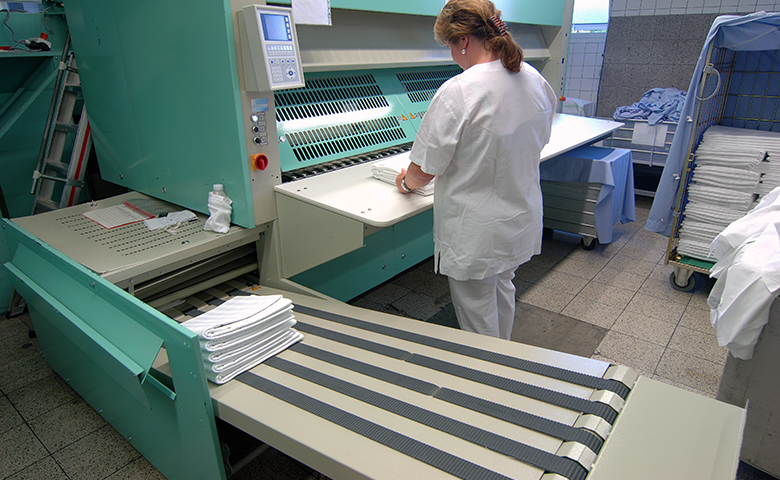
Woman working at a mangle

Have you ever been injured on the job or at home despite having done everything right? You wore your PPE, checked the guards were in place on the tools or machinery you were using, and followed all the instructions perfectly, but somehow still ended up on the wrong side of a safety story. Looking back on incidents like this can feel haunting, and for a former industrial laundry worker from Maine named Stephen King, they can even inspire horror stories.

King’s 1978 short story “The Mangler”—included in his first short-story collection Night Shift and adapted into a movie by Poltergeist director Tobe Hooper—evokes every safety professional’s worst nightmare. When Blue Ribbon Laundry’s speed ironing and folding machine pulls a worker into its mechanism and kills her, an investigation reveals that the fatality should have been impossible. The machine was in perfect working order and all the safety guards were in place. But the incident wasn’t a one-off. Shortly after the death, a steam line that feeds the machine ruptures, burning several workers, and later a supervisor loses his arm trying to escape a second pull-in. The emergency shutoffs do nothing—even with its fuses removed, the Mangler keeps mangling.

Exploring all possible avenues, detective John Hunton turns to his friend, an academic and occultist, who suggests the machine is possessed. And it turns out he’s correct  (this is a Stephen King story, after all). Through a series of day-to-day goings on, the speed ironer accidentally consumed all the ingredients for an ancient demon-summoning spell—virgin blood from a previous worker injury, horse remains in the form of Jell-O, and belladonna used in an antacid tablet—turning the machine into a menace. The results are a horror story classic that, while a little silly in terms of its premise, is known to make readers feel sick while reading it.

Now, there is very little likelihood that your workplace is literally haunted like Blue Ribbon Laundry. But it’s not much of a leap to say that, not unlike the demonic diet that breathed life into King’s infernal ironer, there are other holistic factors that contribute to risk and are just as invisible and dangerous as a monster machine from Hell. Human factors are creeping all around us, turning everything from stairs to shelves to our own vehicles into potential manglers.

Nearly 200,000 Americans work in the laundry business, and for them, a workplace injury can be long-lasting, traumatic and even fatal. On a basic level, there are ergonomic hazards with the repetitive motion, stress and overextension that can come with handling heavy and wet linens. The ambient noise of being around industrial washing machinery can cause hearing loss if PPE isn’t worn properly, too. That’s not to mention the potential burns, heat exhaustion, falling objects caused by tangled laundry, and the slips, trips and falls that can happen when working with water, steam and soap. And let’s not forget the potential for mangling. The massive machines used in the business of washing laundry at scale are terrifying all on their own—something King understood from his pre-fame days.

The good news is that, unlike the supernatural situation in King’s story, we don’t need to consult ancient occult resources to understand the ingredients that summon risk into laundries and other workplaces. You can get ahead of the trouble by making sure those human factors are recognized and taken care of before they mix together and bring a monstrous heap of agony into your facility. After all, horror stories are better when they’re works of fiction.

Follow these tips to banish negative human factors from your workplace. Think of it like an exorcism for risk:

  • Prioritize wellness: When repetition is part of the job, you need to be on the lookout for mental and physical fatigue. There are many preventative measures you can employ to proactively fight exhaustion and burnout, from facilitating physical activities like walking and stretching, to offering regular hydration breaks, especially in heat-prone facilities like industrial laundries. By giving workers opportunities to stay healthy, you can keep them alert to the invisible elements of risk around them.
  • Communicate clearly: Extinguish ambiguity and make people feel comfortable with telling you about the hazards they face. Ambiguity and fear have a way of amplifying the states that lead to injury-causing errors. Whether fear of reprisal keeps folks quiet when they see close calls or potential hazards, or if a lack of clear communication leads to them making assumptions, people can get hurt when there aren’t open and reliable methods of communication in their workplace. Safety leaders can help dispel fear and ambiguity by making an effort to connect with workers, ask them open questions and see if they can walk them through processes.
  • Get onboarding right: Industrial laundry has a high rate of turnover. By prioritizing the two previous points, there is a good chance you can stem at least some of the employee churn, but the reality of the industry is that folks come and go. From a safety standpoint, that puts a lot of pressure on new workers, who face an inordinate amount of risk. The best way to protect new employees in every industry is to get the first 90 days right from an onboarding perspective. Make sure your onboarding process is optimized to include an overview of safety processes, procedures and equipment, a discussion of the right to refuse unsafe work, and the training other workers have already received.

These are just some of the ways you can beat back the human factors, no matter where you work, demon or no demon. And while there is little you can do to prevent the forces of cosmic evil should they decide to manifest in your workplace, at least you will be able to sleep at night knowing the other invisible threats to employee safety are in check.

On-demand webinar

Using a Human Factors Framework for Safety and Operational Excellence

It can be hard to see the connection between safety, productivity, human factors and organizational systems. This webinar will demonstrate how a human factors framework can impact all areas of an organization, linking individual worker safety and organizational systems and provide an outline that allows leadership to manage safety-focused change.

Watch now

Tagged , , , , , , ,

Jack Jackson with NSC Award

William “Jack” Jackson has been in the safety game for a long time. That’s particularly remarkable, given that he never set out to become a safety professional. Rather, he says he “fell into safety through the process of osmosis” when a safety-related job opened up in his workplace at the time. He quickly came to love the job and, as his career in the field developed and grew, his desire to keep people safe only strengthened.

Along the way, Jack received many accolades, with his most recent—and perhaps most impressive—coming from the National Safety Council, which named him as one of five recipients of the 2025 Distinguished Service to Safety Award.

The award is the highest honor granted by the NSC and was presented at the Council’s national conference in Denver.

As a senior safety consultant at SafeStart, Jack has helped countless clients improve their safety management systems and address the human factors that put their employees at greater risk of injury. An accomplished trainer and trusted safety advisor, Jack is also a highly regarded conference speaker who has appeared on some of the nation’s biggest safety stages, captivating audiences with his masterful storytelling abilities and demonstrating the life-saving power of appealing to workers’ hearts and minds.

In its commendation of Jack, the National Safety Council sums it up perfectly:

A prominent safety thought leader and top-rated speaker, Jack has spent decades transforming the safety culture of some of the most dangerous industries. He has maintained himself as a prominent mentor in the field, empowering over 90,000 professionals worldwide while being ranked in NSC’s Top 10 speakers for nine consecutive years.

Everyone at SafeStart has had the opportunity to see the positive contributions to safety that Jack makes, and so we’re all delighted—but not at all surprised—to see Jack receive this public recognition that he so richly deserves. Congratulations, Jack!

On-demand webinar

Using a Human Factors Framework for Safety and Operational Excellence

It can be hard to see the connection between safety, productivity, human factors and organizational systems. This webinar will demonstrate how a human factors framework can impact all areas of an organization, linking individual worker safety and organizational systems and provide an outline that allows leadership to manage safety-focused change.

Watch now

Tagged , , , , ,

2025 Canada's Safest Employer

The 2025 Canada’s Safest Employers Awards were handed out on October 9 at a gala event held at the Toronto Metro Convention Centre. This year, the lauded occupational health and safety awards program featured three individual awards and 20 company and team awards, including the SafeStart Award for Canada’s Safest Employer for Young Workers. 

This SafeStart-sponsored award recognizes an organization in any industry that has innovated ways to put unique practices in place to engage, train and mentor young workers while also displaying exemplary health and safety practices specifically targeted to workers under the age of 25.

“SafeStart is proud to sponsor Canada’s Safest Employer for Young Workers Award. Protecting young workers is one of the most important—and challenging—tasks for safety professionals,” said Barb Tait, CEO of SafeStart. “We’re thrilled to recognize and celebrate organizations that go above and beyond to safeguard this vulnerable group of employees.”

And the winner of the SafeStart Award for Canada’s Safest Employer for Young Workers is Rabcon Contractors Ltd!

Not only do we want to congratulate Rabcon Contractors Ltd., but all of the excellence awardees in this category, including the City of Surrey, Flomax Compression, Green Infrastructure Partners Inc., Memme Infrastructure Contractors, Pronghorn Controls, Techmation Electric & Controls Ltd., Township of Langley, and Utilities Kingston.

The awards process, from nomination to gala, was intense and meticulous. The call for nominations was open from February 24 to May 2, 2025, and was verified by the Canada’s Safest Employers Awards team. Those who were shortlisted provided a more detailed submission. Excellence awardees in each category were selected from the shortlist and officially announced in July 2025 on their website and promoted in Canadian Occupational Safety magazine and online channels. From there, submissions from those excellence awardees were forwarded to an independent judging panel, which determined the winners in each category by vote according to the relevant criteria. The winners were then announced at the gala event in Toronto.

Young workers experience a disproportionate rate of injury and harm, so employers must prioritize their safety. In addition to sponsoring the SafeStart Award for Canada’s Safest Employer for Young Workers, we’ve also produced a new guide to help you protect the newest members of your workforce by getting their first 90 days right. 

Running through the onboarding checklist for new hires can be long and arduous, and it’s not uncommon for culture to get lost in the process. That can spell danger for young workers in particular. Download our free guide to the ins and outs of onboarding new workers and learn how to strengthen your organization’s culture while protecting the fresh faces on your team. From hazards to human factors, you’ll discover key tactics to bring people—especially young workers—up to speed on safety before they risk getting hurt on the job.

Guide to New Worker Safety

Fitting in Fast: Making a Safe Workplace for New Hires

Protecting new hires is a huge safety challenge. How you introduce them to your company’s culture will dramatically affect their immediate safety and instill shared responsibilities for positive outcomes in the future.

Get the free guide now

Tagged , , ,

Driver complacent to driving risks talking to passenger

As with any task, the more a person drives, the more familiar they become with the vehicle. When their comfort level increases, a driver becomes more likely to let their guard down in less threatening areas. This is textbook complacency, a dangerous human factor that can be challenging to recognize because of how naturally it develops.

The following example will walk you through the channeling complacency model, which illustrates how the part of the brain responsible for keeping us alert and in control during new tasks (the prefrontal cortex) becomes less active as familiarity sets in and the autopilot part of the brain (the striatum) takes over. Since complacency can happen in any industry, it’s helpful to look at a detailed real-world example that most of us have gone through—driving a car or forklift—to help recognize the pattern in action.

Starting to get comfortable with driving

At this stage, complacency is low to mid-level; the mental checklist you go over when completing a new task is still present in the prefrontal cortex and striatum, but complacency justifies not checking all of the boxes on the list.

Signs of complacency include letting certain things slide because it will be fine just this one time, like:

  •         Not doing a circle check before getting in the vehicle to drive.
  •         Not wearing a seatbelt when traveling a short distance.
  •         The radio is on and much louder than before.
  •         The mirrors are consulted less.
  •         Hands are relaxed from their set positions.
  •         Turns are taken faster because they are a lot easier to maneuver.
  •         Changing lanes is done more carelessly.
  •         Rolling stops instead of counting to three happen at stop signs.
  •         Less attention is paid to the pedestrians outside the crosswalks on the forklift.

Overall, awareness of the perceived risks is not as heightened as when the task was first performed.

Becoming more comfortable with driving

Familiarity breeds complacency. At this stage, the threat hasn’t gone away, but mid- to high-level complacency sets in because there were no repercussions when the task was previously performed. Activity in the prefrontal cortex has significantly decreased as the striatum prepares to take over. The repetitive actions become automatic—things start to be done as a force of habit instead of being done to protect from the surrounding hazards.

The mental checklist is not consulted as tasks are mostly done from memory. In a forklift, this level of complacency may see the operator forgo using a spotter completely and try to justify it or automatically adjust the mirrors in any vehicle without much thought.

While still thinking about safety in other areas, the automaticity of tasks at this stage shows a more advanced level of complacency. Driving examples include consciously driving over the speed limit or going faster than is safe for a forklift. This type of risk is easy to justify—going with the flow of traffic in a car (habitual), or saying, “This will be a one-off” to ensure a faster arrival time (intentional).

Habitual speeding allows a driver to get comfortable going over the speed limit regularly and when an occasion requires them to intentionally go even faster to avoid being late, they feel safe doing so without giving it a second thought. But this disregards the fact that higher speeds leave less time for the driver to react. Not to mention, it will take a vehicle going at a faster speed longer to stop safely. It’s not that the drivers don’t know about these risks, but complacency stops them from feeling threatened by these risks.

Completely comfortable with driving

“I could do this drive with my eyes closed.” These are the words of a completely complacent driver.  

There’s a false understanding of causation when it comes to driving complacency.  An example of this causation is the belief that driving more trips in the same vehicle on the same roads will cause that person to be a better driver, with a lower risk of an incident occurring. But as drivers become “better drivers,” their confidence overshadows their risk perception, increasing their vulnerability to hazards.  

At this stage, the striatum has completely taken over and the mental checklist is not consulted at all. When people are very comfortable with driving, they may take their eyes off the road and look at other things while moving their vehicle, like the radio, their GPS or their phone. Some people may even claim to be good at driving while using their devices.

Another sign of being completely complacent while driving is highway hypnosis—pulling into the driveway with no recollection of the drive, “coming to” once the vehicle is parked. Driving the same route daily can result in habits taking over, essentially allowing the drive to happen on autopilot or muscle memory. Changing lanes automatically, making the same turns and stopping at stop signs and traffic lights—all without incident or awareness.

Because it’s so familiar, the conscious mind isn’t devoted to paying attention and an entire portion of the trip is blanked out.

On a forklift, inattentional blindness can similarly cause a number of near misses with pedestrians in crosswalks that the driver might not have even registered. Unlike highway hypnosis, inattentional blindness happens when you’re so focused on one particular thing that you fail to notice other things going on around it.

There’s an increased risk of this happening when you’re in a state of complacency, where you’re not at all concerned about the surrounding risks. Thankfully, understanding how complacency can start to develop is an important step in identifying this human factor, which can, in turn, help counteract it with special interventions like habit building. 

This blog post is an excerpt adapted from Fighting Familiarity: Overcoming Complacency in the Workplace. It defines complacency, discusses individual and organizational complacency, offers insights into its contributing factors, and provides a straightforward overview of what organizations can do about it. Download it to proactively reduce complacency in your workplace.

Free Guide

Fighting Familiarity: Overcoming Complacency in the Workplace

Mitigate complacency—don't let complacency influence your company's safety outcomes or operate at an increased level of risk. Become more familiar with individual and organizational complacency, contributing factors and get a high-level overview of what organizations can do about it.

Get the free guide now

Tagged , , , , , ,

Employee Working On Calendar Schedule

Psychological safety is integral to protecting workers around the clock, on the job, at home and on the road. It’s important for the mental health of employees, of course, but there are also direct correlations between psychological safety and its physical counterpart. When psychological safety is absent—like in workplaces that have a volatile work culture, high levels of ambiguity or that suffer from poor lines of communication—human factors start to amplify the risk of critical errors, injuries and worse. 

The trouble is that while it’s easy to accept the connection between psychological and physical safety, it can be difficult to take actions that tilt the scales in favor of incident prevention. Unlike regulatory requirements and technical systems that can directly contain or eliminate physical hazards, the interventions that protect workers mentally are much more holistic. Things like establishing no-blame accountability or fostering a culture of communication require a combination of soft skills and employee engagement that is much more difficult to measure. But there is at least one set of easy-to-follow best practices that can help enhance psychological safety quickly and strengthen culture in the long term: reliable scheduling.

There is a clear connection between a worker’s schedule and their psychological safety. A routine schedule directly influences a worker’s energy level—if they work too many days in a row, or aren’t provided with enough time between shifts to recover, fatigue is sure to set in. When folks are tired, they are more likely to have their minds wander when performing dangerous tasks, making them prone to making mistakes. In the long term, an unforgiving schedule can push people to the point of burnout, which can lead to the development of disabilities like depression in addition to exacerbating fatigue-induced risk.

But it’s not just the intensity of a work schedule that can be dangerous. Volatility is also a scheduling factor with psychological implications. In terms of direct safety implications, schedule changes can be frustrating for workers, especially if they happen at the last minute. Folks who are upset about their schedules operate under an increased level of stress, which in turn can lead to distraction when undertaking risky actions at work. Meanwhile, an unpredictable schedule is detrimental to the quality of a worker’s home life—if they don’t know when they will be working, they can’t reliably make plans with friends and family or engage in the activities that make them happy. And what’s worse, it’s easy to blame the resulting unhappiness on the people in charge of scheduling.

Reliable schedules, on the other hand, help decrease fatigue while improving the quality of home life for workers, decreasing their stress and helping them plan their lives in fulfilling ways. Fulfillment is a major factor in preventing worker burnout and improving worker retention, and prioritizing reliable schedules in your workplace can be the key to achieving it.

So if you’re looking for a quick and dependable way to improve the psychological safety of your workplace, take out the calendar and put some of these three scheduling best practices into play.

Accommodate – When making a schedule, do your best to accommodate shift preferences and scheduling requests without showing favoritism. Be clear about how workers can request certain shifts, and set a regular deadline for non-emergency schedule changes. You don’t have to accommodate everything, but an organized and transparent approach to schedule requests can go a long way in reducing stress and frustration.

Plan – Once you know what shifts workers prefer, try to maintain a regular schedule that is posted with enough notice for workers to easily manage their time between work and home life. While there are many recommended timelines for this type of planning, a good rule of thumb is to ensure there’s less than 25% variance from each employee’s regular hours, and to post two weeks’ worth of schedules in advance. 

Communicate – Proactively ask workers about personal days they intend to use and vacation plans. In addition to demonstrating an interest in their lives, these interactions will help with schedule planning, allowing you to anticipate variations in the regular schedule well in advance.

With a scheduling system that prioritizes worker fulfillment, psychological safety is sure to get a boost in your workplace. Following these best practices will give you a foundation for a more engaged workforce on the clock, and a safer set of employees both on and off the job.

Soft Skills Guide

7 Essential Soft Soft Skills For Hard Workplace Safety Problems

You can check all the right boxes and still feel like your safety program is stalled out, and that no one seems to believe in the value of safety. That’s where soft skills come in.

Get the free guide now

Tagged , , , , , , ,