
Friends watching a scary movie
What’s your favorite scary movie?

Whether it’s a grotesque slasher like Halloween, a highbrow haunting like The Shining or a family-friendly spookfest like Goosebumps, there’s a good chance that it centers around relatable characters encountering perilous safety hazards and experiencing severe injury, death or something even weirder. That’s why, in addition to being a fun spooky-season activity, watching scary movies can be an entertaining way to exercise an effective safety tool: looking at others for patterns that increase risk.

Just like watching someone speed up and down a ladder can remind you to avoid rushing and maintain three points of contact when doing the same thing, watching movies and TV can be moments of free learning. Human factors are at the heart of storytelling, and when it comes to seeing how dangerous they can be, horror stories can sometimes be the most instructive.

The 1996 slasher classic Scream is a perfect example. Set in the fictional town of Woodboro, the film follows a set of high schoolers as they are terrorized by a movie-obsessed killer in a ghostface mask. Unlike ghost stories or weird tales of the paranormal, every hazard that the teens in Scream have to face is based in the real world, meaning that what we see on screen, however improbable, could feasibly happen to us. And if that’s got the hairs on your neck standing up, it’s already working. You’re feeling fear, a powerful human factor at the heart of horror.

The fear factor

Fear is a natural response to the unknown. When we encounter something we don’t understand, it can feel threatening to our sense of order, and we naturally react to that threat by making quick assumptions in order to restore a sense of equilibrium. When hazards are present, assumptions can be dangerous, causing us to rush, focus on the wrong thing, enter the line of fire, or lose our balance, traction and grip. That’s what makes fear such a useful tool for the killer in Scream, who turns human factors against his first victim, Drew Barrymore’s Casey.

Most preventable injuries happen at home, and that’s where we find Casey in the beginning minutes of Scream. It’s night, so she’s probably already tired, and she’s alone (or so she thinks), waiting for her boyfriend Steve and popping some popcorn on her parents’ gas stove. Receiving a phone call from a mysterious stranger, she leaves the popcorn unattended, which should be a big red flag for us viewers. Whether it’s the late hour or the complicity of being at home, Casey is already in a state that makes her prone to taking her eyes and mind off task. The caller soon reveals himself to be a stalker and begins threatening Casey, who makes a number of assumptions that lead her to her death, clutching the phone until her final breath. By the time her parents get home, she’s become the film’s first victim and the house is filled with smoke from the blazing popcorn.

The first sequence in Scream is an example of how human factors can pile up, multiplying the threats facing us. If we want to learn from the on-screen sacrifice of Casey, the lesson is to address how we respond to the fear of the unknown. According to Joshua N. Raub, a pharmacist writing for the medical journal PubMed, our response to the unknown can either sharpen or blunt our intuition. “The important factor is whether the fear motivates or paralyzes your efforts to learn.”

Raub cautions against forming opinions instead of taking time to learn the truth about a situation. While it’s too late for Casey, if you are afraid of an as-yet-unknown hazard wreaking havoc at your home on a dark night, an antidote to that fear can be learning about how human factors lead to critical errors, and some of the measures you can take to preventing them from burning your popcorn … or worse.

Leading indicators for horror movie protagonists

Watching others for patterns of risk, especially in the context of a horror movie, will inevitably lead you to some conclusions about what characters should and shouldn’t do if they want to stay alive. This instinct is reflected in Scream’s most enduring scene, in which the character Randy Meeks, played by Jaime Kenedy, lays out his three rules for surviving a horror movie: never have sex, never take drugs or drink alcohol, and never say “I’ll be right back.”

Randy distilled these rules after watching for patterns in countless horror flicks, and given the killer’s known love of movies, it makes sense that they would be useful during the house party that provides Scream’s climactic setting. But rules like Randy’s make the assumption that horror movie victims commit those cinematic sins on purpose rather than as a subconscious reaction to a variety of human factors they might be experiencing. A better way to mitigate the damage done as a result of those rule infractions would be to set some effective leading indicators that adhere to OSHA’s SMART acronym: Specific, Measurable, Accountable, Reasonable, and Timely.

The good news is that Randy has already identified his goal, which is to prevent deaths resulting from horror movie rule infractions. SMART leading indicators will help him observe trends indicating the likelihood of those infractions, and allow for intervention. As an example: if Randy wants to prevent alcohol and drug use at a house party that he expects the killer to attend, he can set up a reporting system in which participants report their stress levels before, during and after school for a few days. If he notices that stress and fatigue is increasing, he can stage interventions to alleviate those human factors before the party, making folks less likely to imbibe when trying to unwind in the presence of Woodsboro’s masked terror.

With a hazard like Ghostface on the loose, Randy’s data-driven mind can be a major asset when it comes to staying safe. Sadly, as an unpopular teenager with no authority to put a system in place to track his peers’ leading indicators, he really can only keep himself safe. But when it comes to your facility, whether it’s a movie villain or a more common form of hazardous energy, leading indicators can give you the insights you need to keep people safe when things get scary.

Blame can’t prevent sequels

A side effect of having rules like Randy’s in place is that they open the door to blame. And horror movies like Scream show us just how tempting blame can be when fear is at play. Whether it’s from hindsight or the privileged perspective of being an audience member, distance from an incident can make its numerous contributing factors seem more obvious to us than they did to the people involved. When we point to a victim in Scream and declare, “They shouldn’t have said they’d be right back,” we imply that we would have known better in their situation. But that’s a comforting myth. The characters on screen don’t know they’re in a horror movie so they can’t possibly see the errors they are making. And as we saw from Casey’s demise at the beginning of the film, most of the time it’s not our conscious actions that contribute to our gravest errors. Instead, it’s the human factors that influence our subconscious.

Blaming the victims of the ghostface killer in Scream does nothing to prevent his rampage. And in fact, blaming the killer doesn’t do much either. Like all the best movie monsters, Ghostface has a penchant for returning, again and again, to prey on young people by exploiting their assumptions and expectations. There are five sequels and counting in the Scream franchise, and while they all end in pointing the finger at the people behind the mask, the carnage continues, betraying a deeper cultural element at play.

So next time you’re watching a scary movie and the fear strikes you, instead of pointing at your TV and yelling, “Don’t go in there,” remember that it’s not their fault. And while the people you’re watching may be doomed, a critical mind and an understanding of human factors can keep you safe on this side of the screen. Happy Halloween!

On-demand webinar

Dead Tired: What Every Company Must Know About Fatigue

Fatigue is one of the most significant issues that companies face in every industry, as it affects safety, quality and productivity. Workers aren’t just tired—they’re dangerously impaired. This presentation will help you develop a plan to manage fatigue both corporately and individually.

Watch now

Tagged , , , , , , , , , , ,

Worker saws wooden shelf on saw table with jig saw.

We’ve already seen that safety professionals believe human factors have a noticeable impact on hand safety. And there’s evidence to back them up.

One study looked at people showing up at an emergency department with a hand injury. It found that “the dominant hand was involved in 48 (50%) of the cases.” This means that the non-dominant hand was involved in the other half of the incidents. The study doesn’t specify the primary causes of the incidents, but the most logical suspect for non-dominant hand injuries is when the hand is left in the line of fire.

This is further supported by the National Safety Council’s Injury Facts, which says that the top two sources of injuries for fingers are machinery and hand tools. And the top two sources of injuries for the rest of the hand? You guessed it: machinery and hand tools.

These are tools and equipment that people tend to have control over. They are objects that people use frequently, day after day, week after week. Which makes them a breeding ground for complacency and distraction.

If you want to get serious about hand injuries, you need to get serious about human factors. In a previous excerpt from our new safety guide, Show of Hands: Insights and Strategies to Prevent Hand Injuries, we discussed how distraction and complacency can lead to line-of-fire injuries. Fatigue, forgetfulness and ambiguity can influence safety by causing employees to forgo PPE like hand protection. Rushing and overconfidence can result in workers placing their hands in pinch points. Let’s face it: human factors have a hand in a huge number of hand injuries.

The obvious solution has two components. The first is to conduct human factors training so frontline workers can recognize and respond to human factors in real time. That way, they can recognize when they’re more prone to distraction and will know what they can do about it. The end result? Better attention and safer hands.

Part of managing human factors is helping workers deal with specific physical and mental states, like when they become distracted or fatigued. But human factors management goes well beyond the individual level and includes recognizing how organizational systems and processes influence people’s actions.

This means that the second solution component is to embed human factors management principles into your safety management system. This will allow everyone in your organization—from safety to operations to senior leaders—to see workplace systems, processes and interventions through a human factors lens. It makes it easier to identify and correct otherwise hidden causes of incidents and allows you to sustain the momentum created by human factors training more capably. Incidentally, it also gives supervisors and safety folks a hand in supporting habit development—another key part of reducing hand injuries.

Protecting workers’ hands requires safety professionals to be ambidextrous. They need to manage compliance requirements with one hand while handling human factors with the other. They need to stay up to date with safety gloves while also influencing the safety climate, supporting better safety habits, and mentoring more supportive supervisors.

It’s a lot.

These might look like a series of disparate issues and interventions, but they’re all part of the same problem. Human factors are ever-present, turnover happens, and ongoing vigilance is required. One-and-done training and interventions simply won’t cut it. But human factors training, better habits, stronger supervisor skills and a focus on safety climate can help you maintain long-term success with less effort than you might think.

This blog post is an adapted excerpt from the safety guide Show of Hands: Insights and Strategies to Prevent Hand Injuries, which examines robust research and survey data on the most effective ways to reduce hand injuries. Read the guide today for more research, insights and essential hand safety pointers for your workplace.

Guide to Hand Safety

Insights and Strategies to Prevent Hand Injuries

Based on robust survey data, this free guide outlines which safety intervention work—and which gaps are often overlooked in hand safety.

Get the free guide now

Tagged , , , ,

Canada's Safest Employer

The 2024 Canada’s Safest Employers Awards were handed out on October 10, at a gala event held at the Liberty Grand in Toronto. This year, the lauded occupational health and safety awards program featured three individual awards and 17 company and team awards, including the SafeStart Award for Canada’s Safest Employer for Young Workers. 

This SafeStart-sponsored award recognizes an organization in any industry that has innovated ways to put unique practices in place to engage, train and mentor young workers while also displaying exemplary health and safety practices specifically targeted to workers under the age of 25.

“SafeStart is proud to sponsor Canada’s Safest Employer for Young Workers Award. Protecting young workers is one of the most important—and challenging—tasks for safety professionals,” said Barb Tait, CEO of SafeStart. “We’re thrilled to recognize and celebrate organizations that go above and beyond to safeguard this vulnerable group of employees.”

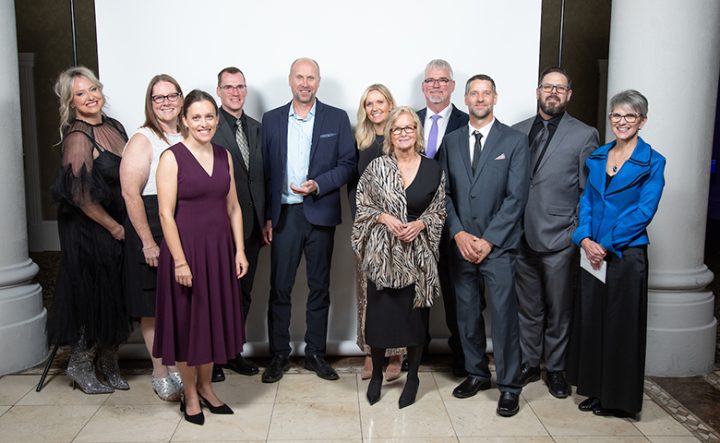
City of Barrie, winners of the SafeStart Award for Canada’s Safest Employer for Young Workers

And the winner of the SafeStart Award for Canada’s Safest Employer for Young Workers is the City of Barrie!

Not only do we want to congratulate the City of Barrie, but all of the excellence awardees in this category, including the City of Surrey, Flomax Compression, Green Infrastructure Partners, Kawartha Dairy Ltd., Modern Niagara, Pronghorn Controls, Rabcon Contractors Ltd. and SAT Consulting & Construction.

The awards process, from nomination to gala, was intense and meticulous. From February to April 2024 there was a call for nominations, which were verified by the Canada’s Safest Employers Awards team. Those who were shortlisted provided a more detailed submission. Excellence awardees in each category were selected from the shortlist and officially announced in August. From there, submissions from those excellence awardees were forwarded to an independent judging panel which determined the winners in each category by vote according to the relevant criteria. The winners were then announced at the gala event in Toronto.

Young workers experience a disproportionate rate of injury and harm, so it’s crucial that employers prioritize their safety. In addition to sponsoring the SafeStart Award for Canada’s Safest Employer for Young Workers, we’ve also produced a new guide to help you protect the newest members of your workforce by getting their first 90 days right. 

Running through the onboarding checklist for new hires can be long and arduous, and it’s not uncommon for culture to get lost in the process. That can spell danger for young workers in particular. Download our free guide to the ins and outs of onboarding new workers and learn how to strengthen your organization’s culture while protecting the fresh faces on your team. From hazards to human factors, you’ll discover key tactics to bring people—especially young workers—up to speed on safety before they risk getting hurt on the job.

Guide to New Worker Safety

Fitting in Fast: Making a Safe Workplace for New Hires

Protecting new hires is a huge safety challenge. How you introduce them to your company’s culture will dramatically affect their immediate safety and instill shared responsibilities for positive outcomes in the future.

Get the free guide now

Tagged , , ,

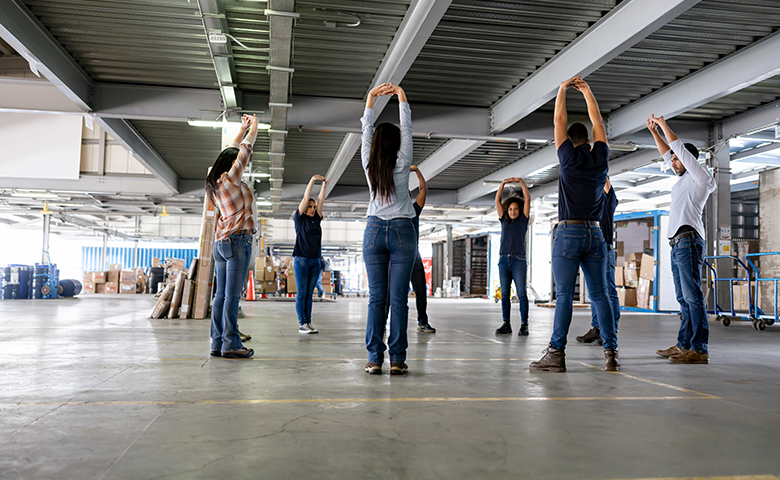
Group of employees taking a break to stretch while working at a warehouse

Prioritizing our health is difficult. The Center for Disease Control (CDC) says fewer than half of adult Americans meet the minimum guidelines for aerobic physical activity. And it’s easy to understand why. Between balancing work and home life, finding the time and energy to exercise can seem impossible. 

According to the CDC, the most common barriers to physical activity are lack of time, lack of energy, lack of social support, lack of motivation, lack of skill, high cost and lack of facilities. When you put it that way, it’s no wonder folks are having trouble keeping fit. But as understandable as it might be, our collective lack of activity can be dangerous. Beyond the more obvious health implications, a lower fitness level also has an impact on safety.

Physical well-being has direct effects on mental health, which in turn affects psychological safety. And when mental health and psychological safety are low, human factors like fatigue, frustration and rushing become much more hazardous. Those human factors lead to critical errors and increase the risk of serious injury or fatality. By finding ways to prioritize physical well-being, we can better equip ourselves to avoid or manage the effects of burnout, stress, panic and other human factors.

Of course, if simply knowing the benefits of physical activity was enough to keep us active, we’d all be in peak condition. The fact is, those barriers listed by the CDC are stubborn and persistent. Thankfully, there are a few strategies you can deploy in order to hurdle those obstacles and stay safe by getting physical. These approaches can help you improve your own safety, demonstrate personal commitment to the safety of others, and offer you some ways to keep employees safe in the workplace.

Walk it off

A great strategy for adding more physical activity to your life is walking more. It might seem simple, but the effects of walking are profound. Walking regularly can help you maintain a healthy body weight and reduce body fat. It can improve your cardiovascular health and decrease your risk of stroke or cardiac arrest. It can reduce stress levels and improve your mood. It can improve your energy levels and memory. According to research from the University of Exeter, a 15-minute walk can even curb your cravings for sweet foods, naturally improving your diet as a result.

One of the most important benefits of walking is its ability to improve your sleep. Fatigue is a dangerous human factor that can increase our risk of serious injury by affecting our awareness. When we’re tired, it’s difficult to keep our attention focused on what we’re doing—our minds are prone to wandering, our vision can become blurry, and we can even nod off to sleep when driving or operating machinery. With better sleep comes less risk of fatigue, which can be enough to keep you out of danger’s way.

When it comes to walking more, don’t worry about counting steps. Just try to make walking a bigger part of your life in simple ways that feel natural and fit with your lifestyle. Setting aside 15 minutes to walk around your neighborhood before or after work can do wonders—just be sure to observe pedestrian safety near roadways. But if that commitment is too much for your busy schedule, it’s okay to start small. Instead of picking up the phone to talk to a colleague, walk to their workstation and talk face to face. Take the stairs instead of an elevator or escalator when possible. Even a simple gesture like parking at the far end of a parking lot can add a bit more walking to your day. And it all adds up—if your goal is to improve your health and reap the safety benefits of exercise, finding small windows for walking can be enough to move the needle.

Teamwork makes the dream work

Two major barriers to physical activity are lack of social support and lack of motivation. This is where we can help keep each other fit, by organizing and participating in group exercise. Whether it’s a walking or running group, a work sports team or a collective fitness goal, working out together helps keep folks accountable to one another. The sense of group accomplishment creates a positive feedback loop that helps give participants the drive to be active when they might otherwise prioritize more sedentary activities.

Group activities can also go a long way in breaking down the lack of skill barrier too. Allie Townsend, assistant professor in the Menninger Department of Psychiatry and Behavioral Sciences, says:  “A big benefit of group fitness with an instructor is that you don’t need to think about how to do it – you just show up and are guided every step of the way.”

In addition to the fatigue-fighting benefits of exercise, group physical activity can contribute to a stronger safety culture. According to the Iowa State University’s kinesiology department, exercising in groups can boost motivation and aid in habit building, and research shows that interpersonal connection plays an important role in keeping folks engaged in exercise. The communication required for cooperative activities facilitates team building and supports the use of a common language. The more workers interact with each other, the stronger their sense of belonging will be and the more they will want to look out for others in their community.

Of course, group activities are more complex than solo initiatives like walking. You can help facilitate group physical activity in a few ways, including:

  • Organize a walking or running group
  • Start a work sports team in a community recreational league
  • Include information about local fitness classes on bulletin boards or in your digital display presentations

It’s important that participation in these activities remains voluntary. Everyone has their own relationship with exercise and sports, and it’s important to respect that. By simply making employees aware of opportunities to be active together, you are breaking down barriers without burdening them with another obligation.

Active leadership for active lifestyles

The most difficult barriers to overcome when dealing with physical activity have to do with accessibility. Almost all physical activity requires specialized equipment or facilities if it’s going to be done safely—even some types of active walking should only be done with the right kinds of gear. Complicating things more, physical activity preferences are strongly linked to our sense of identity, so what gets some people moving might not motivate others. This means that the facilities and equipment that overcome accessibility barriers for some won’t necessarily help others struggling to exercise more. Here we encounter an opportunity to show active leadership and personal commitment.

Active leadership and personal commitment are skills proven to improve safety climate, which over time can solidify a positive safety culture. Active leadership is the ability to inspire action through what you do and say, while personal commitment is making sure that your people have what they need for the tasks in front of them. When it comes to keeping your workforce safe through healthier lifestyles, nothing shows more active leadership and personal commitment than investing time and resources in physical activity.

If it’s budgetarily feasible, carving out a physical activity allowance that each employee can claim and use to pay for their preferred fitness-related costs is the most direct way to show active leadership in this regard. You don’t have to subsidize a home gym for every employee either—even a small amount can make running shoes more affordable. And covering part of a fitness center membership will show that you care about workers’ health.

Of course, that kind of money might just not be available at your company. This is where you can dedicate other resources like time, space and energy to the cause, demonstrating personal commitment and leading with action. Map a 10-minute walking route inside or outside your facility and encourage employees to use it on their breaks. Start each shift with a pre-work-guided stretch to promote blood flow and prevent injuries. Give workers extra time on their lunch break a few times a week that they can use for personal physical activity. And if it’s possible, be flexible with start and end times at work to allow employees that extra wiggle room they might need to attend a fitness class or squeeze a swim, run or walk into their day. You don’t have to implement all of these suggestions—even one gesture of personal commitment can help the people in your workplace feel supported when it comes to being more physically active.

With worker well-being at all-time lows and exhaustion on the rise, now is a perfect opportunity to promote physical activity in your workplace. By taking these steps to break down the barriers to physical activities, you will be empowering your workforce with the tools to stay safe in the face of human factors and other health risks.

On-demand webinar

Using a Human Factors Framework for Safety and Operational Excellence

It can be hard to see the connection between safety, productivity, human factors and organizational systems. This webinar will demonstrate how a human factors framework can impact all areas of an organization, linking individual worker safety and organizational systems and provide an outline that allows leadership to manage safety-focused change.

Watch now

Tagged , , , , , , , , , ,

Digital Display October Pedestrian Safety Month

October is here, school has been back in session for a while and summer vacations are in the rearview mirror. We’re acclimating to the fall weather and settling into our regular work routines. There’s a comfort to the season, but don’t be lulled into a false sense of security—it’s also a time when complacency to surrounding risks can be quite high.

Safety awareness initiatives, like days or weeks of observance, help alleviate complacency by reminding us of hazards that we may have started to ignore due to their familiarity. As previously outlined in our safety topic presentation ideas posts, October is Pedestrian Safety Month. And at the end of October, we observe National School Bus Safety Week along with Teen Driver Safety Week. Given the persistent theme, a digital display presentation on pedestrian and driving safety will be helpful in your workplace.

The dangers of walking

Local news headlines in most areas have recently been flooded with struck-by incidents involving pedestrians. To get people’s attention within your facility, you can use local headlines in your digital display presentation (though you’ll want to be sensitive if the pedestrian in question was known to any workers within your facility). You can also use roadway fatality statistics like this to capture awareness:

In 2022, there were 7,522 pedestrians killed in traffic crashes in the United States. That is 21 pedestrians a day and 145 pedestrians a week. This represents a 0.7% increase from the 7,470 pedestrian fatalities in 2021.

Another quick stat from the National Highway Traffic Safety Administration (NHTSA) that will grab the audience’s attention is:

In 2022, the number of pedestrians killed in traffic crashes was the highest since 1981.

That number often does not account for the bicycle riders who reached a similar fate:

1,105 bicyclists were killed in traffic crashes in 2022 (NHTSA).

When it comes to bicycles, laws vary from state to state regarding whether they should be considered a pedestrian or a vehicle. This can also vary between different municipalities. A cyclist’s classification is often based on where they are riding their bike. When traveling on the road or bike path, bicycles are typically classified as a vehicle, but if they are on the sidewalk, they are classified as a pedestrian. Regardless of which category they fall under, cyclists are people affected by the human factors experienced by drivers and should be included in your presentation.

Looking at young drivers

It’s always important to pay attention while driving, not only to bicycles and pedestrians surrounding you but also to the other drivers sharing the road. Look at others is a SafeStart critical error reduction technique, and it can help you learn how to address your own human factors in complex situations with numerous shifting variables. When we’re discussing road safety, an important set of those variables encompasses young drivers, cyclists and pedestrians.

New teenage drivers are more susceptible to crashes, and the observance of Teen Driver Safety Week draws attention to specific risk factors for young people behind the wheel. But drivers are only part of the equation when it comes to road safety. That’s why Parachute—Canada’s national charity dedicated to reducing serious injuries—has redefined the week they formerly called National Teen Driver Safety Week (October 20–26, 2024) as Canadian Youth Road Safety Week, centered on the theme #OurFutureRoads.

As the Parachute website states:

“We have shifted our awareness week focus to encompass all youth road users, including drivers, passengers, pedestrians, cyclists and transit users, with the goal of empowering youth ages 15 to 24 to become more involved in road safety issues, with the goal of creating and supporting road systems in our communities that are safe and equitable.”

Your digital display presentation in the workplace should follow the same outline as Parachute’s #OurFutureRoads plan. Taking a holistic view of road safety will help people in your facility remember to look at everyone they share the road with, whether they’re in their car or using a crosswalk. And it does not need to only apply to your workers. Provide information that workers can take home to their teen drivers. After all, safety is a 24/7 concern and the hazards encountered on the road have effects that stretch far beyond your facility.

Habits for fighting complacency

Facts and stats are excellent ways to catch people’s attention and educate them about driver and pedestrian-related dangers. But it’s important to also include habits in your digital display presentation that people can work on in order to put road safety into action. Use the reliable digital display techniques from our instructional guide to craft your presentation with the following information:

1. Always be scanning
Regardless of whose right away it is, always do an L-C-R scan at every intersection. This will help you to see any vehicles that may not be following the traffic rules (e.g., running a red light, or turning without a signal/warning), school buses (there are big fines if you pass a stopped school bus while its lights are flashing, even if you didn’t see it), and pedestrians or bicycles that seem to appear out of nowhere (these people may also disobey traffic rules so scanning for them is a lot better than them hitting you).

Intersections aren’t the only place that requires your head on a swivel—drivers should also be scanning streets that are lined with parked cars. In cases like these, you’ll want to slow down and watch for people, bicycles or objects that may enter the roadway from between vehicles. On country roads or open highways, it’s a good idea to scan fields and ditches for animals that may suddenly enter your line of fire while driving and cause you to swerve, leave the road or crash.

2. Plan your route
There’s a reason that the speed limit is lower in school zones—unexpected incidents consistently happen near schools. This is why we observe National School Bus Safety Week. Nearly two-thirds of school bus occupant and pedestrian fatalities happen outside of the school bus. You can play your part in reducing school zone fatalities by planning your route ahead of time to avoid these and other high-pedestrian areas. And if these areas cannot be avoided, give yourself extra time or travel during non-peak hours so you can avoid rushing when in these dangerous sections of road.

3. Halloween fright night
October is also the month when we celebrate Halloween, which is an incredibly dangerous time to be on the road. Children are more likely to be struck by a car on Halloween night than any other day of the year. Ensure there’s a reminder in your October digital display presentation about the distractions people might encounter if driving on Halloween night.

4. The darkness factor
Darkness is a contributing factor to Halloween road dangers, but it’s not exclusive to the spooky holiday. Take the opportunity to remind employees that the sun is rising later and setting earlier in October, as we transition into fall, and they need to adapt their driving, walking or cycling accordingly. Depending on when you’re traveling to work, you may notice it’s a bit darker. According to the NHTSA, more than three-quarters of all pedestrian fatalities occur in conditions other than daylight. Planning your travel around the sun—if and when possible—is another habit that can help improve safety. If you have to travel in the dark, be aware that more attention to your periphery is required. Meanwhile, if you are walking, avoid wearing dark clothing at night. And if you are biking, always travel with safety lights.

Sometimes a simple reminder can be the spark to set people on the path of working on the habits that will save them from injury or worse. Set up your October digital display presentation with these tips to keep everyone safe this month—especially pedestrians.

On-demand webinar

Using a Human Factors Framework for Safety and Operational Excellence

It can be hard to see the connection between safety, productivity, human factors and organizational systems. This webinar will demonstrate how a human factors framework can impact all areas of an organization, linking individual worker safety and organizational systems and provide an outline that allows leadership to manage safety-focused change.

Watch now

Tagged , , , , , , , , , , , ,

Guerilla Marketing for Safety to Prevent Complacency

Complacency is the enemy of engagement. When we become used to safety messaging in our lives, important information tends to go unnoticed and we slip into autopilot mode. We look but don’t see. We act without thinking. We let our comfort with our daily routine obscure hazards and invite other human factors into our work. 

Complacency is a dangerous state to be in because it’s difficult to detect and even harder to dispel, requiring purposeful habit building to tamp down. Thankfully, in a recent SafeStart Lunch and Learn presentation, SNF Chemtall’s Safety and Training Supervisor Devron Kelso demonstrated some techniques borrowed from the world of guerrilla marketing that he’s used to supercharge engagement at his facility and achieve encouraging safety results.

In his presentation, Kelso defines guerrilla marketing as “an advertising strategy using surprise and/or unconventional interactions to promote something.” Using examples of corporate street art that advertises fast food and paper towels, he shows how introducing variation into familiar routines can force people to notice things they normally take for granted.

The techniques he devised are creative twists on familiar things—riffs on safety posters, instructional videos and storytelling—and they had massive effects on his workforce. The department where Kelso works saw a significant drop in total incidents in regard to both safety and quality. Operator participation, meanwhile, shot up significantly, with near-miss reporting accelerating in the wake of Kelso’s creative initiatives.

“Not only did operator participation increase,” he said, “but trust in the safety department—trust in things getting fixed—increased as well, which helped cultivate a good safety climate.”

And here’s the best news: you can follow Kelso’s example. Safety is a collective project. If you see something working for someone like Kelso, and he’s showing you how he got those results, then you can do what he did. Here are some guerrilla marketing safety techniques you can use in your workplace to increase engagement, improve participation and address human factors.

Dynamic signage

Signage is prone to complacency: the ‘set it and forget it’ aspect of labeling can be a little too literal. For example, Kelso’s facility had Simpsons-themed safety posters that, while fun and entertaining, became so familiar that they were more like old wallpaper than helpful safety signage. As safety industry thought leader Ray Prest put it when discussing complacency in HazCom: “Once safety labels have become visual white noise, it’s up to frontline leaders to find new ways to keep every worker thinking about their HazCom training.” The same can be said of any safety bulletin.

Kelso cut through that white noise and managed to find a safety signal by taking a page from street team music promoters and graffiti artists. His solution was to create and distribute magnetized signs that workers could place in locations around the facility where they noticed the risk of a critical error. If an employee encountered a door that potentially opened into the line of fire of a lift truck, they would slap a magnet on the door warning: “Line of fire.” If they almost had a fall, they would place a sign in view of the hazard saying: “BTG potential” for balance, traction, and grip risks.

These magnetic notes are a simple concept with great promise when it comes to fighting complacency. Their dynamic placement keeps workers aware of their familiar surroundings and they require workers who encounter them to reflect on risks they see. As Kelso puts it, “We were integrating them with the stories people were telling.”

When workers told stories about their near misses and then got to participate in making the workplace safer with this dynamic signage, they started to feel like they were playing a role in keeping others safe. By channeling his guerrilla marketing philosophy, Kelso managed to turn safety labeling into an engaging form of workplace communication.

Popular language

We often highlight the importance of a common language in safety. But common languages draw from more than just shared terminology about hazards, safeguards and human factors. One of the biggest influences on the ways we talk to one another is entertainment media. Music, film and TV constantly introduce new words and usages into our conversations, and media of all types provide common touchstones for workers to relate to one another. Entertainment can provide popular models through which we understand our own experiences. At SNF Chemtall, Kelso turned this common cultural language to his advantage.

In Kelso’s Lunch and Learn video, he explains: “I said, ‘I want to get a little crazy. I want to explore my creativity a little bit and see if they’ll let me get away with some stuff.’ So I asked my boss if I could borrow the camera from marketing. I wanted to make a SafeStart music video.”

Parodying Coolio’s 1995 Grammy Award-winning “Gangsta’s Paradise,” Kelso rapped over elaborate scenarios acted out by workers on his site. The video showed SNF employees experiencing human factors, illustrating how they led to critical errors, near misses and incidents, as well as how to reduce the risks being shown. The result was immediately successful. He went on to spoof Robert Zemeckis’ Back to the Future films in order to promote t-shirt giveaways, which he used as touch points to engage workers in safety discussions that reinforced key human factors management concepts. His sense of humor and clear enthusiasm for safety is infectious in these videos, so it’s no surprise folks at SNF are demanding more. And even better: the video production process made safety personal for the employees who participated as actors.

You don’t have to put yourself through film school to follow in Kelso’s footsteps. There are multiple ways to discuss safety that can make it as engaging as the rest of our lives, which are saturated with entertainment media. By using the common language of humor and familiar references, Kelso isn’t just communicating important safety messages, he’s telling everyone that safety is just as much a part of our lives as our favorite music videos. And it’s not just a work thing, safety is 24/7.

Taking it home

That last point is crucial and worth repeating: safety is 24/7. At work, on the road, at home—anywhere you interact with the world and are subject to human factors, you will also experience some level of risk. In 2022, 86% of medically consulted injuries suffered by workers happened off the job. Worker deaths, meanwhile, occurred off the job more frequently by a factor of 24, accounting for 95% of fatalities. Most of that misfortune—55% of off-the-job injuries and deaths—happened at home. For a safety leader, this is a conundrum; how do you keep employees safe in environments where you have zero direct influence?

Kelso found a way to extend his engaged safety culture to the hazardous home environment by introducing the aptly named “Take it Home” Program. This initiative encouraged employees to get family members to tell safety stories. Initially, this was facilitated through in-person events like a department picnic, but now the stories are shared on video and uploaded to the company’s online portal, SNF Connect. Folks with exemplary safety stories are given recognition and rewarded with prizes.

Rules and regulations play an important role on worksites, but with so many incidents happening at home, the challenge of keeping workers safe after the whistle blows comes down to engagement. Storytelling is one of the best ways to share safety knowledge and reflect on the role dangerous human factors play in our lives. By incentivizing non-employees to participate in work safety initiatives like “Take it Home,” Kelso is not only building a safer community but also putting SNF Chemtall workers in safer environments once they clock out. If a worker’s family is taking safety seriously then their home is seriously safe.

Keeping it real

While Kelso’s definition of guerrilla marketing runs on surprise and unconventional interactions, there is a third element that is immediately apparent when watching his presentation: enthusiasm. The initiatives he introduced to SNF Chemtall all required a significant personal investment of creative energy, and he admits it hasn’t always been easy. By stoking engagement through his entertaining programs he set a high benchmark for himself that he had to continually meet. 

As he said, “It was my job to motivate people in safety, but it’s no one’s job to motivate me.”

For Kelso, motivation comes from the positive feedback he sees in the increasing levels of engagement. He is energized by “playing Santa Claus” and seeing the smiles on workers’ faces when he delivers prizes for their participation in safety initiatives. But most of all he is motivated by his family.

“My job is to keep everyone else safe. If everyone else is safe, that means they’re safe around me. Which means I get to go home safe,” he says.

And that’s a great reminder for those who would follow Kelso’s example. Engagement begets engagement. Safety builds safety. Take these ideas and make them your own, in ways that are genuine to you. Your authenticity will shine through in your efforts, bringing out the best in your workers and motivating you to keep up with this effective long-term strategy that can keep folks safe on the job and at home.

For more inspiration, and to dive a bit deeper into Devron Kelso’s uniquely effective philosophy of safety communications, be sure to watch the full Lunch and Learn video.

On-demand webinar

Improving Culture, Safety and Performance with a 24/7 Approach

80% of injuries happen off the job but most workplace safety programs only apply during work hours. In this webinar, you will learn how a 24/7 approach can increase employee engagement during safety training, improve your safety culture, and positively impact your bottom line.

Watch now

Tagged , , , ,

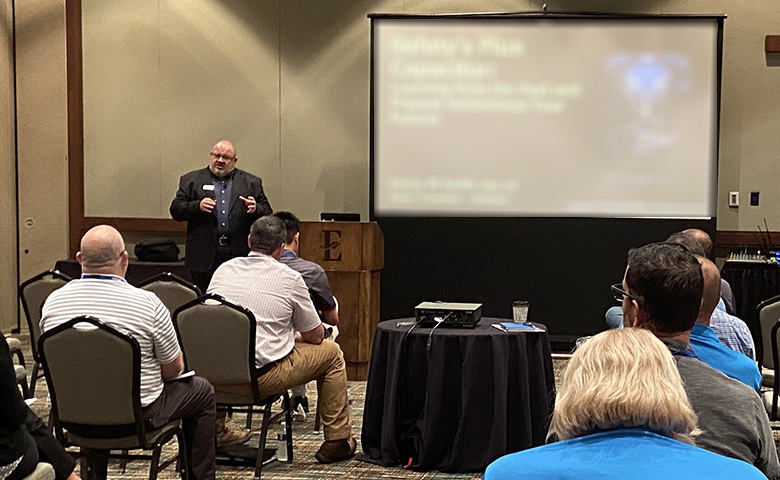
Danny Smith Presenting

As a global association of professionals that has supported the occupational health and safety industry since 1911, the American Society of Safety Professionals (ASSP) is one of the most vital institutions for safety folks. It’s also a membership-driven organization—35,000 strong with a presence in 80 countries—and as such, many of its most vital leadership positions are held by experienced volunteers.

The latest term for ASSP’s volunteer leadership began in July, and Danny Smith—a senior safety consultant at SafeStart—stepped into the role of Training and Communications Practice Specialty Administrator.

The ASSP has 18 different practice specialties, ranging from ergonomics and fire protection to utilities and risk management. Each practice specialty provides members with a network that offers professional and technical content focused on their field of interest, with a goal of dealing with common safety challenges and improving their abilities as a safety professional.

In his new role, Danny Smith will help members gain technical insight into training and communications, which are vital components of being an EHS professional. Training and communication touch almost every safety professional and all of the other ASSP practice specialties/common interest groups. The ability to communicate with workers about identifying and navigating hazards is a critical part of the job for safety professionals. As Smith recently noted in an article, “hazard prevention and control is more than just putting up a sign.”

Fortunately, Smith has over two decades of experience working in the EHS industry and is well-versed in the nuances of training and communications for traditional safety issues and advanced concepts like human factors. This experience will serve him and the members of the ASSP well as he begins his two-year term.

On behalf of everyone at SafeStart, congratulations, Danny!

On-demand webinar

Using a Human Factors Framework for Safety and Operational Excellence

It can be hard to see the connection between safety, productivity, human factors and organizational systems. This webinar will demonstrate how a human factors framework can impact all areas of an organization, linking individual worker safety and organizational systems and provide an outline that allows leadership to manage safety-focused change.

Watch now

Tagged , , , ,

All in on hand safety
A helping hand from supervisors

When SafeStart conducted a hand safety survey, respondents outlined the top four activities they think are most effective at reducing the frequency of hand injuries. They are:

  • One-on-one conversations
  • Audits/walkthroughs/observations
  • Training
  • Toolbox talks/pre-shift meetings

What do these four measures have in common? Frontline supervisors have a hand in all of them.

Unfortunately, supervisors don’t often seem to be doing a particularly good job of supporting safety, as the same survey found that they are the group that could most improve at managing daily hand safety, beating out organizational leaders, safety culture and even individual employees themselves.

Supervisors can be effective advocates for hand safety. But first, they need three key things: a strong set of safety and human factors knowledge, communication skills and the trust of employees.

Turning supervisors into safety champions can be a major undertaking. But it’s well worth the effort, and there are many quick wins that can result in remarkable improvements. Here is a collection of the best resources for both immediate gains and long-term transformations in your supervisory safety abilities:

The Safety-First Supervisor. There are six common ways that supervisors influence safety—and they can make or break your company’s safety efforts. This guide explores the skills, knowledge and techniques that supervisors need to effectively manage the safety of their crew.

Safety and the Supervisor: Developing Frontline Leadership Skills to Improve Safety. This webinar by Chris Ross, CSP, CPLP, gives EHS managers and company executives practical insights into how they can make targeted improvements to their supervisors’ safety capabilities.

7 Essential Soft Skills For Hard Workplace Safety Problems. This guide takes a look at the transformative interpersonal skills and techniques that turn engagement tactics from mediocre to magnificent, and allow supervisors to establish more trust with workers.

SafeLead Skills for Leaders. When you need to step beyond free resources, this top-notch program is designed specifically to address gaps in frontline leadership and round out safety-related skills at all levels of leaders by providing new perspectives on human factors, safety conversations and how to lead by example.

Getting a grip on culture

Safety culture has a sizeable influence on hand safety. Safety professionals were presented with seven different statements about hand safety, covering common topics like PPE and line of fire and supervisors. Out of all of them, the statement they agreed with most was: “A strong safety culture can offset physical/human factors that cause hand injuries.”

Above all else, the one thing that everyone agrees on is that safety culture matters. You can see it in your own workplace too. Ask yourself a few questions:

  • You provide gloves but is there a culture of wearing them?
  • You have supervisors but are they actively supporting hand safety culture?
  • Workers know about human factors but is there a culture of responding to them?
  • Workers know about habits but is there a culture that reinforces them until they stick?

Culture change is a major undertaking. It can be difficult, long-term work. It is also an essential component of hand safety.

Culture is an organization-wide issue. Many people think it’s a leadership-only item, and yes, it starts and ends with leadership. However, a great deal of workplace culture is determined by the patterns of thought and behaviors of workers themselves in response to leadership. It starts at the top and moves down the organization to the bottom, where it once again emerges and returns to the top. It’s a never-ending loop. This is why culture can be so hard to shift—and why it can be so powerful once it does.

In fact, safety culture change is such a challenging endeavor that it’s best not to try to change it directly. Instead, you should focus on safety climate, which, as Pandora Bryce, PhD says, “is how [employees] feel about safety right now. One can think of it as the organization’s current mood about safety.” If safety culture is like an entire forest, then safety climate is each individual tree.

You can’t plant or cut down a forest overnight. But you can plant a couple of seedlings every day. Or, if your safety climate is sliding in the opposite direction, then you can think of it as cutting down a few trees every day. It may not feel like much from one day to the next. But over time, you’ll start to recognize whether the culture forest is growing or shrinking.

The message here is to focus on what you can control: setting a consistently positive tone, communicating openly with your team, showing a personal commitment to hand safety and upholding hand safety expectations fairly and without blame. If you’re in a leadership position, you can also empower supervisors to play a larger role in safety performance. Do these things long enough and you’ll see the culture start to change—and better hand safety outcomes won’t be far behind.

Fortunately, there are compounding effects and efficiencies associated with these hand safety solutions. Human factors apply to all types of activities, so learning to manage them improves a range of safety outcomes. When people learn how to stay out of the line of fire it applies not only to their hands but the rest of their bodies in a wide variety of settings, including:

  • Eye injuries (flying debris, chemical exposures)
  • Foot injuries (stepped on, crushed under)
  • Burns, cuts, contusions, fractures (anywhere on the body)
  • Pinch point or caught between injuries (tools, equipment, material)
  • Forklift collisions (with people or objects)
  • Dropped tools (from heights)

It takes time to build a great culture, but that means that once you shift a safety culture it can be resilient and maintained in the face of any day-to-day challenges. And once you embed human factors management principles in your safety management system, you’ll have set yourself up for long-term success.

Workers don’t avoid hand injuries by accident. Good safety outcomes require a dedicated commitment to reach beyond compliance. The benefits of doing so can be widespread and long-lasting.

How safe will your employees’ hands be tomorrow, next week, next year? The answer to that question is in your hands.

This blog post is an adapted excerpt from the safety guide Show of Hands: Insights and Strategies to Prevent Hand Injuries, which examines robust research and survey data on the most effective ways to reduce hand injuries. Read the guide today for more research, insights and essential hand safety pointers for your workplace.

On-demand webinar

Safety and the Supervisor: Developing Frontline Leadership Skills to Improve Safety

Supervisors are the bridge between organizational directives and on-the-ground operations. Their skills and knowledge are critical to a seamless flow of information in both directions and to their organization's safety success. This webinar offers EHS managers and company executives actionable advice on improving safety through leveraging the role of frontline leaders.

Watch now

Tagged , , , , ,

Workplace conversation about something personal like opioid use

There’s no denying it—the opioid crisis is a safety issue. In 2022, 81,806 people died from opioid overdoses and 14,716 of those involved prescription drugs. And while overdose incidents are commonly framed as an off-the-job hazard, the fact is that 525 of the people who died overdosed while they were at work. 

Indirectly, opioid use amplifies other hazards too. The use of any mind-altering substance increases human factors like fatigue and distraction, which can lead directly to injury-causing errors at work, at home and on the road. Opioid use disorders (OUDs) increase a person’s risk of suicide by a factor of 14.

Identifying the opioid crisis as a workplace hazard is the first step to protecting your organization from its effects. The next steps are a little more difficult. OUD is a highly stigmatized illness, which means that even acknowledging that it can affect your employees and their families can be difficult, let alone taking the necessary steps to save lives in the event of an overdose. Stigma is a byproduct of culture, and culture can be changed through leadership skills that can affect the safety climate. One of those skills is active leadership.

Active leadership is a proactive skill that helps workplace leaders inspire action and directly affect change in the workplace. When you listen to employee feedback and implement solutions in a timely manner, when you communicate clearly with workers on a regular basis, and when you take the initiative to make your workplace safer by setting tangible goals—this is active leadership. In the case of protecting workers from the hazards presented by opioids, here are some steps that workplace leaders can take that will fight stigma and equip employees with the tools to respond to overdoses or seek recovery with confidence.

1. Add naloxone to first aid kits

When an overdose happens, you need to be equipped to respond. That means having naloxone at the ready. Naloxone—sometimes referred to by the brand name Narcan—is a medicine that reverses the effects of an opioid overdose. It’s fast-acting, easy to use and only works on people with opioids in their system. Naloxone poses no risk if the person administering it misidentifies the signs of an overdose.

Available as an injectable or a prepackaged needle-free nasal spray, naloxone belongs in your first aid kits. While death from an overdose can take up to a few hours, survival is dependent on a bystander’s ability to respond, and this is where naloxone is critical. An individual experiencing an overdose may have slow or shallow breathing, or even go into cardiac arrest. Naloxone can restore normal breathing quickly and allow a responder to proceed with CPR or other life-saving measures while waiting for emergency crews to arrive.

In addition to having a life-saving tool on hand, adding naloxone to your first aid kits is also a strong first step in fighting OUD stigma. Despite the statistics showing how common opioid use is, many people might not think that an opioid overdose is something they will ever encounter. By including overdose response medicine next to common items like bandages, bandaids and antiseptic, you will send a powerful message: opioid overdose can happen here and we are prepared.

2. Distribute educational materials

Active leadership requires effective communication—so take a proactive approach to spreading practical and educational information about the realities of opioid use. With such a stigmatized topic, there’s quite a bit to cover. Here’s a list of topics that can further prepare your employees for the realities of the opioid crisis:

Information on each of those bullet points can be distributed in multiple ways. Posters and take-home handouts are good options, and you can include them as topics in toolbox talks too. There’s even enough information about opioid crisis safety for a digital display presentation. However you choose to communicate this vital information to workers, be sure to actively engage your workforce with these educational resources. Point out the posters, ask them what they think of the presentations, talk to them about how important this knowledge is, and ask them their opinions. Nothing helps break stigma more effectively than talking about taboo topics.

3. Communicate with inclusive language

Of course, not all types of discussion proactively dispel stigma. In order to maintain a positive and safe work environment, it’s important to build a common language that doesn’t alienate people who have substance use disorders. Applying active leadership in this regard involves setting an example by using vocabulary that avoids conflating substance use with dirtiness, weakness or shame.

This can be as easy as swapping out slang with commonly used alternatives:

  • Instead of “addict” or “junkie,” say “person with substance use disorder (SUD)” or “opioid use disorder (OUD).”
  • Instead of “clean,” say “substance-free.”
  • Instead of “drug problem” or “substance abuse,” say “drug use” or “misuse”

Remember: not every opioid emergency is caused by OUD; people can accidentally overdose on their prescribed medication.

Be sure to use this stigma-busting language in conversation, during toolbox talks and in your printed communications. When talking to workers, be patient as they also learn the terminology, reminding them of the less harmful words without blaming them if they’ve misspoken.

Beyond the direct effects of using inclusive vernacular, developing a common language in your workforce is a sign of a strong culture. If everyone is using the same words to talk about a hazard, and no one feels attacked or belittled by those words, then workers will be more likely to respond effectively to an overdose incident when it occurs.

Strong safety culture saves lives

One of the best ways to protect workers and their families from the deadly effects of the opioid crisis is by building a strong safety culture. By demonstrating active leadership with these action items, you are doing your part to minimize this invisible hazard.

Active leadership is just one of six leadership skills identified by our researchers as effective in changing a workplace climate. Check out our white paper, “Six Leadership Skills for Improving Safety Climate,” and see what else you can do to improve the way things are done at your facility regarding opioid safety.

On-demand webinar

Using a Human Factors Framework for Safety and Operational Excellence

It can be hard to see the connection between safety, productivity, human factors and organizational systems. This webinar will demonstrate how a human factors framework can impact all areas of an organization, linking individual worker safety and organizational systems and provide an outline that allows leadership to manage safety-focused change.

Watch now

Tagged , , , , , , ,

September is National Preparedness Month digital display presentation in workplace

September is here. The kids are back in school and family vacations are over. It’s the transitional month from summer to fall and it brings several pertinent topics for your safety talks, from concussion awareness to food safety. While each of these monthly awareness campaigns can make for a great digital display presentation to broadcast on the TVs in your facility, one September topic stands out as particularly well-suited for the moment: emergency preparedness.

Emergency preparedness should always have attention in your facility, and September is the perfect time to use digital presentations as a way to keep it front of mind. After all, it’s National Preparedness Month. The OSHA Emergency Action Plan requirements (as per §1910.38)—and the steps your workplace is taking to meet them—offer a perfect framework for your monthly presentation content, serving as a helpful refresher for folks that can help fight complacency in a crisis.

For your September digital display presentation, include the following minimum action plan elements as a helpful reminder of what to do and who to contact in the event of an emergency.

The procedures for reporting an emergency

It is important to designate one person (and another as backup) to call 911 in the event of an emergency. This person is also likely to wait by the roadside to direct emergency responders to the appropriate location during an evacuation. Sharing this information helps others know they don’t need to stay behind to call for help, as someone else is already doing that, so they can evacuate quickly and safely. Include the names of the people responsible for this task in your digital display presentation. Any other procedures for reporting an emergency can be included in your slides as well, including the protocol for communicating with supervisors and writing up reports.

The procedures for emergency evacuation

Situations that require evacuation include fires, extreme weather, workplace violence, explosions, toxic material releases, and radiological and biological accidents. Dedicate a section of your digital display presentation to showing your building evacuation plan with clearly marked exits and the designated meeting spot. It should also detail any exit route assignments—some people are designated to check certain rooms on their way out, others are asked to close doors. If each person performs their one assignment, everyone can evacuate quicker. Evacuation procedures are best practiced as drills, but a visual depiction of the plan displayed on the screens in your facility can work effectively as a reminder. 

Not all emergencies require evacuation, and it’s important to review your shelter-in-place emergency procedures as well. Your preparedness presentation is the perfect venue for that. Shelter-in-place situations include active shooter, tornadoes, wildfire smoke, or when chemical, biological, or radiological contaminants are released into the environment. Each of these conditions will require different courses of action.

In the event of an active shooter, quietly find a place to hide where the assailant is unlikely to find you. To prevent an active shooter from entering your hiding place, lock the door or block the door with heavy furniture. It’s important to remain quiet and out of the sight of the shooter. For a tornado, the location to shelter in place is a basement, or ground-floor room or closet in the interior of the building—one without windows or external doors. In the event of a chemical threat, however, a location above ground is preferred.

It’s also important to communicate that people should not leave the building or go outside until the shelter-in-place order is lifted and they are directed by an emergency response person to do so. The only other time you can leave when a shelter-in-place order is in effect is if the area becomes unsafe. Most shelter-in-place orders are lifted within a few hours, but it’s a good idea to have an emergency kit with non-perishable food, drinking water and other supplies on hand. Use your presentation to alert viewers to where these emergency kits are located and what they contain.

The procedures to be followed by employees who remain to operate critical plant operations before they evacuate

Obviously, evacuation is the most important action but there are some things that may need to be done in a crisis to avoid creating additional hazards for emergency responders. Some employees may be assigned to operate fire extinguishers or shut down electrical systems/gas. Depending on the site, vehicles and equipment may need to be moved to allow emergency vehicles access to the site. Your digital display presentation should identify who is responsible for what tasks in order to prevent someone else from trying to assume that role during an emergency and creating additional hazards.

The procedures to account for all employees after evacuation

The size of your workplace will dictate how many people are responsible for accounting for every employee and facility guest after evacuation. Typically, in an emergency, one person is assigned to bring the visitor’s log to account for non-employees such as suppliers and customers.

Some facilities will designate areas within the evacuation assembly area where specific groups of employees should gather after evacuating. This allows their supervisor or the person responsible for taking attendance to find their group. Confusion in the assembly areas can lead to delays in rescuing people, especially if they’re trapped within the active job site. This could also cause unnecessary and dangerous search-and-rescue operations if emergency responders believe they may be inside the evacuated building. 

Your digital display presentation should remind viewers of the emergency headcount procedures, as well as who is responsible for them and why they are important for the safety of everyone, from workers to visitors to emergency responders.

The procedures to be followed by employees performing rescue or medical duties

Certain employees are trained to perform rescue or medical duties within a facility and it’s crucial to define their role in the event of an emergency. By listing the trained personnel and their specializations in your presentation, you are complying with OSHA and offering a helpful reminder of who is trained in first aid/CPR in the facility or on the job sites. This can also be a good opportunity to review and reuse some of the content from any digital display presentations you may have already created concerning CPR and AED awareness.

The name or job title of every employee who may be contacted by employees who need more information about the plan or an explanation of their duties under the plan

It’s one thing to have an emergency action plan—but in order for that plan to be effective you need to know who to contact for more information. Document the names, titles, departments and telephone numbers of employees who can be contacted for additional information and keep this information in a space that everyone can access. Your digital presentation should indicate who people can go to with questions about the emergency action plan.

Don’t forget human factors

Human factors can play a role in emergency preparedness too. It can be hard to remain calm and avoid rushing during an active emergency, but that is why it is so important to be prepared. In the event of a fire, distraction and fatigue can impede reaction time when it’s the most critical. Fear in a workplace violence emergency is another human factor that could take over without the proper preparation, and it’s important to know how to react in all situations. 

Complacency is also a major issue. As long periods of time pass without an emergency at your facility, it becomes increasingly difficult for workers to see the risk associated with a potential crisis. Consider severe thunderstorms, which should be included in your emergency preparedness plan. Because most people have experienced a multitude of thunderstorms in their lifetime without major incidents, it’s common for folks to ignore the real threat they pose. But thunderstorms cause hundreds of thousands of injuries and nearly 10,000 deaths every year. We need to actively remind ourselves of the dangers of severe weather in order to be prepared for the emergencies they can cause. The same goes for other types of emergencies. Your digital display presentations are a handy way to push against that complacency, helping everyone in your facility stay alert to threats they’ve naturally come to downplay.

For more information on how to develop a great digital display presentation from scratch, check out our guide to mastering creating digital safety presentations. 

Free Guide

Fighting Familiarity: Overcoming Complacency in the Workplace

Mitigate complacency—don't let complacency influence your company's safety outcomes or operate at an increased level of risk. Become more familiar with individual and organizational complacency, contributing factors and get a high-level overview of what organizations can do about it.

Get the free guide now

Tagged , , , , , , , , , , , , ,

Group sitting around listening to a story

When it comes to safety, storytelling is powerful. Telling stories to each other helps us identify and manage human factors while uniting a workforce through shared experiences and common language. Storytelling builds engagement, enhances safety and makes a work culture more resilient and adaptable to change. Anyone can learn to tell effective safety stories if they practice using these three narrative tools.

Preparation

Even the most professional and practiced storytellers prepare their material in advance. Here are some ways to boost your storytelling effectiveness through preparation:

  • Write down common scenarios you’re likely to encounter in your workplace and use them for inspiration—by anticipating the situations you’ll find workers in, you can be sure the stories you have are relevant and effective.
  • Write down a few good stories in advance—this can help you internalize the stories.
  • Come up with open-ended questions to encourage your workforce to tell you their stories.
  • Make sure to recognize and address any human factors that contribute to the story.
  • Rehearse your stories by reading them out loud.
Brevity

Storytelling is important, but it isn’t going to be your workplace’s main priority. That’s why it is crucial to practice conciseness in your stories. 

Stick to the main points:

  • Beginning: What happened and to whom?
  • Middle: What challenge was faced and how was it overcome?
  • End: What was the result?

Keeping a story brief is a respectful way to engage your audience who may not feel like they have much time. A few well-chosen words can help you show personal commitment and keep your stories effective.

Illustration

Illustration can take many forms in storytelling:

  • Sensory descriptions—how something looked, sounded or felt
  • Shared emotions—describing a state you experienced and asking, “Have you ever felt this way too?”
  • Examples of how things could be—explaining how a near miss could have been worse; describing how a change will make something better

Showing relevant examples of what you want to communicate, how they apply to the situation at hand and why they matter to your audience are all useful ways to engage your listeners. These types of illustrations help stories land with workers no matter what human factors might be influencing them at the time.

Now that you have the tools, put them into practice and see how they affect your workplace safety climate. Prepare brief and illustrative stories to tell employees, and come up with engaging questions that will inspire them to share their own stories with you. Offer positive reinforcement, actively listen and keep applying these tools. Through repetition, you will begin to see the engaging benefits of storytelling embedding themselves in your long-term safety culture.

On-demand webinar

An Expert Look at Employee Engagement and Safety

Without employee engagement, even compliance can be hard to achieve. This webinar, with insight from experts, was created to help busy professionals find the right approach to increase engagement in safety. The accompanying resources aim to help you apply this new knowledge and continue learning about the subject.

Watch now

Tagged , , , , , , ,

A hurricane in the midst of the storm

Batten down the hatches, it’s hurricane season! Starting in the spring and continuing into late autumn, this window of severe weather generally reaches its violent peak in the late days of summer. And with 2024 already producing catastrophic storms like Hurricane Beryl, it’s important to make sure you’re ready for the chance of high winds, torrential rain and storm surge—the abnormal and dramatic water rise caused by tropical storms. After all, being prepared is the only way to stay safe when facing severe weather like a hurricane.

A hurricane is a severe tropical storm characterized by heavy rain and sustained winds that rotate in a circle—this is why they are often referred to as cyclones. The earliest tropical storms of the year start brewing around May in the Eastern Pacific region, which extends westward from Mexico and Central America. The first major Eastern Pacific hurricanes of the year form in mid-June. And while these storms typically move away from land, they do pose threats to shipping lanes and western states like Arizona and Hawaii. Meanwhile, Atlantic hurricane season begins in June and covers the Atlantic Ocean, the Caribbean Sea and the Gulf of Mexico. Atlantic weather patterns are responsible for the majority of landfall-making tropical storms in North America, with the first major hurricanes typically forming in late August or early September.

A storm by any other name

Using names helps keep track of storms. A developing cyclone is given a name once its wind speeds exceed 39 miles per hour and it officially becomes a tropical storm. Once sustained winds reach 74 miles per hour, the named tropical storm ascends to hurricane status.

Storm names used to be chosen randomly but now they are assigned from pre-planned lists. The Atlantic list contains 21 names in alphabetical order (skipping Q, U, X, Y and Z) and alternating between male and female names. Meanwhile, the Pacific list contains 24 names including X, Y and Z. Each region has only six lists of names and they are cycled through in the same order over a six year period. 

If a storm is particularly significant or deadly, its name is retired. Notable retired names include Pauline (Pacific 1997), Floyd (Atlantic 1999), Kenna (Pacific 2003), Katrina (Atlantic 2005), Alma (Pacific 2009), Manuel (Pacific 2013), Odile (Pacific 2013), Patricia (Pacific 2015), Harvey (Atlantic 2017), Irma (Atlantic 2017), Maria (Atlantic 2017), Nate (Atlantic 2017), Ida (Atlantic 2021), Fiona (Atlantic 2022), Ian (Atlantic 2022), Dora (Pacific 2023), and Otis (Pacific 2023). As you can see, multiple names can be retired in a year if it’s an especially bad hurricane season. You may recognize some of these names and have your own story of how the storm impacted you or your region. Consider sharing your story with employees to emphasize the importance of hurricane preparation.

You might already recognize some of this year’s storm names. The 2024 list of names for Atlantic storms includes Alberto, Beryl, Chris, Debby, Ernesto, Francine, Gordon, Helene, Isaac, Joyce, Kirk, Leslie, Milton, Nadine, Oscar, Patty, Rafael, Sara, Tony, Valerie and William. Meanwhile, the Eastern Pacific storm name list includes Aletta, Bud, Carlotta, Daniel, Emilia, Fabio, Gilma, Hector, Ileana, John, Kristy, Lane, Miriam, Norman, Olivia, Paul, Rosa, Sergio, Tara, Vicente, Willa, Xavier, Yolanda and Zeke.

Regardless of its name, each hurricane brings the potential for serious injury and death. That’s why it’s crucial to understand their associated weather alerts, their various categories and best practices for keeping safe in the path of an extreme cyclone.

Watching for warnings

The first step to being prepared for a hurricane is understanding the common language used to inform the public about cyclone risks. A hurricane watch is issued when hurricane conditions—cyclones with sustained wind speeds of 74 mph or greater—are possible in your area within a 48-hour timespan. During this time, it’s also important to pay attention to storm surge watches, which indicate the possibility of rising water moving inland from the shore. Storm surges can create life-threatening situations due to flooding, rapid erosion of the coastline and destruction of seaside buildings and infrastructure.

As conditions persist or worsen, the National Hurricane Center will issue a hurricane warning 36 hours before tropical-storm-force winds develop. This gives you time to complete your preparations. It’s crucial to be proactive with hurricane safety, as it is common for roadways and stores to be closed during and after these massive weather events.

Once the hurricane arrives, stay sheltered until the storm has fully moved on from your region, even if weather conditions seem to be letting up. In the eye of the storm, there is often a calm area of blue sky, light winds and little to no precipitation. The eye can induce a false impression that it’s safe to go outside. But in addition to the hazards posed by newly wrought destruction, flooding and debris, the storm is still raging and can pick up quickly.

It’s important to check that complacent sense of security, especially if you think hurricanes are only a danger to coastal regions. Many areas in the U.S. and Canada are safe from direct hurricane impact but they may still experience the remnants of tropical systems in the form of torrential downpours and subsequent flash flooding. Hurricanes and tropical storms can also produce tornadoes. This is why it’s important to stay alert to hurricane reports no matter where you live. Tracking the paths of tropical storms can keep you one step ahead of several other types of severe weather.

The five levels of hurricane 

Being able to prepare for a hurricane depends on knowing what kind of storm is headed your way. There are five categories of hurricanes, each of which presents its own level of danger. 

Category 1—a minimal hurricane—has wind speeds between 74–95 miles per hour and a storm surge of 3–5 feet. It’s no surprise that a minimal hurricane only causes minimal destruction. Damage is primarily to road signs, trees, shrubbery and unanchored homes—no significant damage to structures. However, it is possible for wind speeds of over 75 miles per hour to lift roofs and break windows. Even though it’s entry-level, do not discount the dangerous effects of a Category 1 hurricane.

Category 2—a moderate hurricane—has wind speeds between 96–110 miles per hour and a storm surge of 6–8 feet. With increased wind speeds, in addition to the damage a Category 1 would cause, Category 2 storms may blow down trees and road signs. Expect major damage to exposed mobile homes. Other buildings may also see damage to roofs, windows and doors but no major structural harm. Marinas and piers are in danger of flooding in this category, and evacuation of some residences on the shoreline and low-lying areas may be necessary.

Category 3—an extensive hurricane—has wind speeds between 111–130 miles per hour. The damage caused by a Category 2 hurricane can be expected in a Category 3 plus some structural damage to small buildings. Smaller structures near the coast can be destroyed in a Category 3, and larger structures near the coast may be damaged by waves and floating debris. With a storm surge of 9–12 feet, serious flooding is likely in coastal areas. Low-lying or flat terrain five feet or less above sea level can also be flooded. Evacuation of low-lying residences within several blocks of shoreline may be required.

Category 4—an extreme hurricane—has wind speeds between 131–155 miles per hour and a storm surge of 13–18 feet. The damage caused by a Category 3 hurricane can be expected plus extensive damage to roofing materials (complete failure on small houses), windows and doors. Category 4 storms completely destroy mobile homes. Expect major damage to lower floors of structures located near shore due to flooding from the storm surge, destruction of beaches and possible evacuation of all residences within 500 yards from shore as well as single-story residences within 2 miles from shore.

Category 5—a catastrophic hurricane—has wind speeds greater than 155 miles per hour and a storm surge higher than 18 feet. As with previous categories, expect all the damage caused by a Category 4 storm as well as severe and extensive damage to windows (shattering) and doors, and complete failure of roofs on many residences and industrial buildings. There is a potential for some complete building failures, and small buildings could be overturned or blown away. Massive evacuation of residential areas on low ground within 5 to 10 miles of shore may be required.

Hurricane preparation tips

As dramatic and dangerous as a hurricane can be, it will not strike without warning. Depending on where you live, you may have days to prepare before a scheduled landfall. It’s important to take advantage of this head start by preparing for a potential cyclone and its aftereffects. 

What to do before a hurricane
  1. Have plywood on hand to board windows to prevent dangerous debris from smashing through. Wind speeds over 75 miles per hour (Category 1) can lift roofs and break windows. Some people only board up their windows for major hurricanes (Category 3 or higher) but it is recommended to err on the side of caution.
  2. Trim tree branches to reduce the danger of these falling onto your house during a hurricane.
  3. When a hurricane is forecast, bring loose outdoor items like patio furniture inside and secure anything that might be blown around, like garbage cans or BBQs.
  4. Turn off your propane tank.
  5. Move your vehicle into the garage or another secure location when possible.
  6. Check to make sure you have the right emergency supplies. Stock up on water, ready-to-eat food, heating fuel, battery-powered/wind-up flashlights, radios and extra batteries. Pack a to-go bag. Withdraw cash in the event electronics don’t work. Make sure that there is gasoline in your vehicle in the event you need to evacuate and ensure that your vehicle emergency kit is fully stocked.
What to do at work
  1. Listen for updates from the National Hurricane Center to keep track of the hurricane’s severity and any pertinent updates.
  2. Follow the instructions of the personnel in charge of the emergency action plan. If evacuation is required, follow the prescribed procedure. If officials recommend shelter in place or they issue a stay-at-home order, do not try to evacuate, as staying put might be safer than leaving due to dangerous driving conditions.
  3. If there isn’t anyone overseeing the emergency, go to a hurricane-safe room that is designed for high winds. If you don’t have such a room in the building, find a small, interior, windowless room on the lowest level of the building (not the basement), putting as many walls as possible between you and the outside.
  4. Stay away from windows and doors.
  5. Do not use elevators in the event the power fails and you’re trapped inside.
  6. Prepare for power outages. Locate emergency kits and supplies for those in the building. Turn off heating and cooling systems. Unplug sensitive electronic appliances such as computers,  TVs, microwaves, etc. This will protect against power surges that can occur when power is restored.
What to do at home
  1. Listen for updates from the National Hurricane Center to keep track of the hurricane’s severity and any pertinent updates.
  2. If you live in an evacuation zone, know the dangers that apply to your area and get out early to avoid being stuck in traffic.
  3. If a stay-at-home order is issued and you live in a house that is situated in a flood zone, do not go to the basement as it could flood. Go to an upper level (two or three stories where possible) but avoid the attic or top floor in the event of a roof collapse. If you live in a high-rise building, stay below the highest elevations, where the high winds can do severe damage.
  4. Stay away from windows (and do not open windows—opening the windows will not equalize the pressure).
  5. Prepare for power outages. Turn off heating and cooling systems. Unplug electronic devices such as TVs, computers, microwaves and ovens. This will protect against power surges that can occur when power is restored.
  6. If your home is a mobile home, seek shelter elsewhere.
What to do if you’re outside
  1. Avoid driving or going outdoors during a hurricane.
  2. If possible, get inside a sturdy building.
  3. Watch out for flood waters that fill low-lying areas, and try to get to higher ground.
  4. If you must be out in the storm, do not walk through flowing water or drive through flooded areas.
What to do if you’re in your vehicle
  1. Avoid driving or going outdoors during a hurricane.
  2. Refer to “What to do if you’re outside” instructions.
  3. If your vehicle is trapped in rapidly moving water, stay inside the vehicle unless the water is rising inside the vehicle, then seek refuge on the roof of the vehicle.

Now that you know how to prepare for a hurricane, spread the word to ensure the safety of everyone around you. Print and distribute the guidelines in this post, or incorporate them into a toolbox talk to make sure that your employees are safe in the event of a hurricane, no matter where they are or what human factors are present.

On-demand webinar

Improving Culture, Safety and Performance with a 24/7 Approach

80% of injuries happen off the job but most workplace safety programs only apply during work hours. In this webinar, you will learn how a 24/7 approach can increase employee engagement during safety training, improve your safety culture, and positively impact your bottom line.

Watch now

Tagged , , , , , , , , , , ,